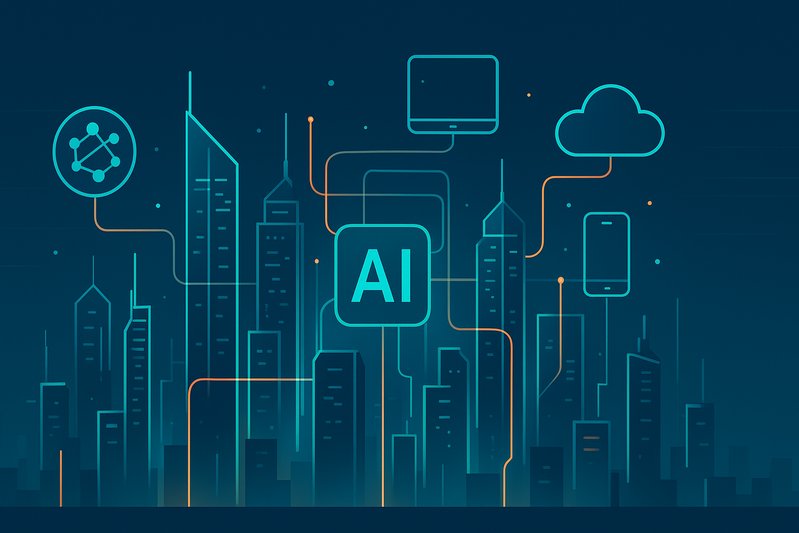
AI Platforms and Devices: Google’s Quantum Leap into the Future
Introduction
In the vast digital ocean of technological evolution, Google emerges as a leviathan, consistently pushing the boundaries of what’s possible. As we stride into the latter half of this decade, Google’s advances in AI platforms and devices have positioned it at the forefront of the tech industry. These innovations are not just transforming how we interact with technology but are setting the stage for a future where AI seamlessly integrates with everyday life.
The Rise of Google’s AI Ecosystem
Google’s approach to AI has evolved from experimental applications to powerful product architectures influencing global tech landscapes. At the heart of this transformation is Google’s Gemini project, which combines the strengths of its DeepMind division and cloud computing capabilities to create multimodal “thinking” models. These models enhance a spectrum of services, from search and cloud platforms to consumer devices. Gemini has already shown promising results, particularly in strengthening Google’s enterprise offerings with AI Mode monetization and wider adoption of AI-driven products.
Search and AI-Enhanced Advertising
Traditionally, Google Search has been the cornerstone of the company’s revenue. Today, it’s at the nexus of AI-driven innovation. The introduction of AI Overviews and AI Mode enables search results to be more interactive, providing users with not just answers but comprehensive, dialog-driven experiences. These enhancements have led to over 10% increases in usage of AI-enhanced queries, with significant improvements in user engagement and ad performance. This evolution is coupled with a transition to conversational ad units, allowing businesses to interact with potential customers in real-time, seamlessly integrated within Google’s search responses.
Privacy Sandbox and Regulatory Context
Despite these advancements, Google’s AI ambitions are not without constraints. Regulatory scrutiny remains a pivotal challenge, impacting how these innovations can be implemented across different markets. The Privacy Sandbox initiative is a direct response to growing concerns about user privacy, setting new standards for data handling and user consent, with phased adoption tailored to compliance timelines. Google’s strategic alignment with regulatory guidelines ensures a balance between technological advancement and user trust.
Expanding AI’s Role in YouTube
AI is reshaping content creation and consumption on YouTube, where tools like Dream Screen and other augmented reality applications enhance video production. These advancements allow creators to produce richer content while embedding interactive elements such as shoppable tags directly within videos. These features not only augment the creative process but also pave the way for new revenue streams through affiliate and catalog integrations. As YouTube continues to innovate, AI-enabled tools will likely drive dynamic changes in how audiences engage with content.
Revolutionizing Maps and Navigation
Google Maps is undergoing a fundamental shift from being a static navigation tool to a dynamic, conversation-driven platform. This transformation is facilitated by generative AI technologies that incorporate real-time data to offer immersive and interactive user experiences. Features like multi-stop trip planning and AR integrations position Maps as not just a utility app but as an integral part of decision-making processes in travel and commuting.
AI-Powered Cloud and Device Infrastructure
Google Cloud’s transformation into an AI-centric platform is supported by innovations in custom silicon development and advanced AI models. The introduction of Axion, Google’s new Arm-based CPUs, promises substantial improvements in energy efficiency and cost-effectiveness, while services like Vertex AI and BigQuery continue to empower enterprises with sophisticated analytical capabilities. Collectively, these technologies position Google to meet the growing demand for scalable, efficient cloud services.
Conclusion
Google’s advances in AI platforms and devices are indisputably setting new standards within the tech industry. From search engine enhancements and YouTube’s enriched content ecosystem to groundbreaking improvements in Google Maps and cloud infrastructure, these innovations reflect Google’s commitment to redefining the synergy between AI and daily life. As Google’s technological narrative unfolds, its continued focus on AI signifies a quantum leap into an era where AI is central to both personal and enterprise solutions.
Key Takeaways
- Google’s AI strategies encompass advanced innovations in AI platforms and cloud services.
- The integration of AI into search and advertising is creating new engagement opportunities.
- Enhanced privacy standards ensure compliance with international regulations, fostering trust.
- AI-driven innovations in content creation and mapping are transforming user experiences.
- Advances in cloud infrastructure and device capabilities are paving the way for more efficient tech ecosystems.