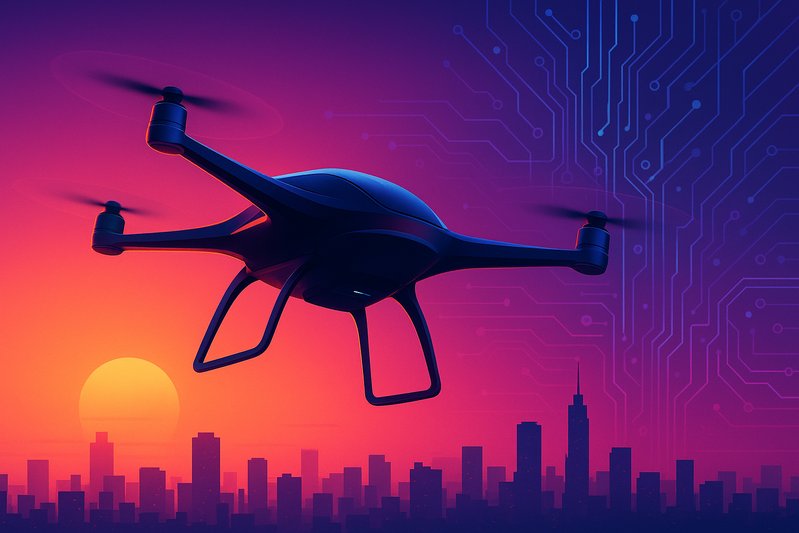
Airspace Autonomy: From Drones to Pilotless Flights
Introduction
Once the domain of science fiction, the integration of autonomous systems into regulated airspace is rapidly becoming a reality. From drones performing complex medical deliveries to the dream of pilotless commercial flights, these technologies are transforming how we think about aviation. This article explores the advancements, challenges, and future prospects of drones and uncrewed aircraft systems (UAS) as they carve out their place in modern aviation.
The State of Drone and UAS Technology
Onboard Autonomy and Airspace Integration
Autonomous drones have seen significant leaps, particularly in their ability to perceive and navigate their environments. Modern drones like the Skydio X10 leverage onboard AI to conduct sophisticated tasks such as inspection and mapping, which are invaluable in GPS-challenged industrial spaces. DJI’s Matrice 350 RTK has become a staple in both consumer and professional settings, equipped with compliance features that enable seamless integration into regulated airspace segments.
Regulatory Frameworks and BVLOS Operations
The path to full airspace autonomy is paved with regulatory advancements. In 2024, the U.S. FAA Reauthorization directed the agency to expedite rulemaking for Beyond Visual Line of Sight (BVLOS) operations, a crucial step for scaling drone usage in commercial contexts. Simultaneously, EASA’s U-space ushered in risk-based airspace services to facilitate routine drone operations across Europe. The UK’s CAP 722 continues to serve as the blueprint for BVLOS approvals and complex operations within challenging settings.
Real-World Deployments
Practical deployments are already showcasing the business viability of drones. Companies like Zipline have demonstrated the potential of drones in executing seamless medical and retail deliveries with their innovative P2 architecture, which improves last-mile delivery efficiency. These real-world illustrations are not just technology demonstrations, but previews of a new frontier in logistics and commercial operations.
Progress in Crewless Aviation
Certified Safety Augmentation
In crewed aircraft, certified safety features such as Garmin Autoland are bridging the gap towards full aviation autonomy. These systems represent the pinnacle of reliability, having endured rigorous testing to meet design assurance levels required for certification. Such technologies are crucial steps toward pilotless commercial flights, providing crucial evidence of how autonomous control systems perform under real-world conditions.
Emerging Frameworks for Large UAS
As the push for automation continues, unsegregated airspace integration of large UAS becomes increasingly critical. The emphasis is on standardizing BVLOS regulations, creating unified traffic management systems, and establishing type certifications that encapsulate robust detect-and-avoid technologies—all necessary for ensuring safety in shared skies.
Challenges in Scaling
Despite the technological advances, several hurdles remain. Key challenges include statistical safety assurance under open-world uncertainty, cybersecurity threats, and liability issues across various stakeholders. Notably, as technology proliferates, its energy consumption and environmental impact present significant considerations.
The Road Ahead: Future Prospects by 2030
Envisioned Adoption Paths
By 2030, it is anticipated that adoption will be concentrated in sectors with defined operational complexity and clear economic benefits. Middle-mile logistics, facility inspections, and structured retail drone deliveries are expected to scale, driven by robust regulatory frameworks and demonstrable return on investment. For urban transport, adoption hinges on achieving consistent safety records and seamless regulatory integration.
Technological and Regulatory Synergy
Future technological progress will likely focus on bridging real-time perception and action with formal safety envelopes. Long-term, enabler technologies such as digital twins and foundation models for robotics will provide the flexibility and efficiency needed to handle diverse scenarios autonomously. The synergy between technological standards like V2X and advancements in regulatory measures such as FAA’s BVLOS framework will be central to achieving seamless integration.
Conclusion
Airspace autonomy is on the cusp of revolutionizing the aviation industry, offering a glimpse into a future where routine flights and complex logistics are managed by advanced autonomous systems. With continued innovation and regulatory support, these advancements promise a world where the skies are home to drones and UAS navigating autonomously, unlocking new possibilities across numerous sectors.
Key takeaways include the potential of seamless supply chain integration, the importance of regulatory advancements, and the ongoing need to address the challenges of safety assurance and environmental impact. The journey toward completely autonomous airspace, while challenging, is one rich with opportunities to redefine modern aviation.
Sources:
- For further insights and detailed statistics, please refer to the research report and the specific references within the source document.