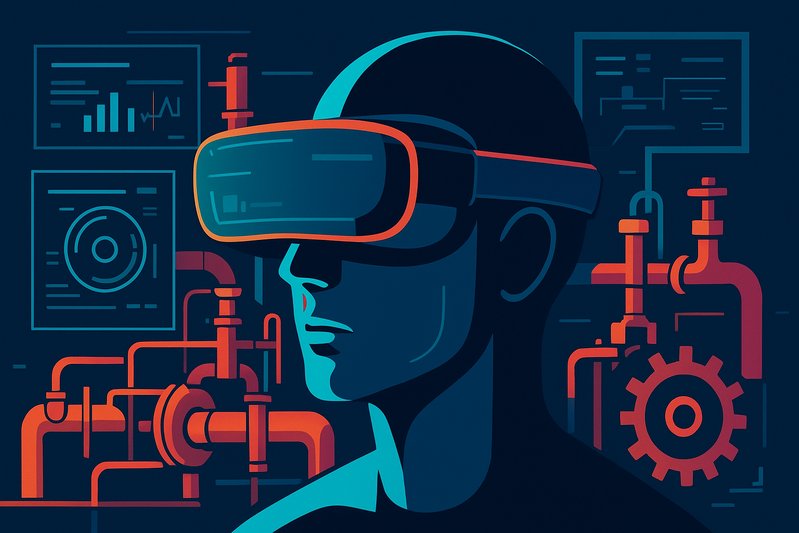
AR Revolutionizes Enterprise Solutions by 2026
Exploring the Transformative Impact of Augmented Reality in Industrial Settings
As we step into 2026, augmented reality (AR) is poised to radically transform enterprise solutions, enhancing productivity, safety, and efficiency across a myriad of industrial applications. From logistics and healthcare to architecture, engineering, and construction (AEC), AR technology is establishing itself as an indispensable tool, promising a leap in capabilities that few other technologies can replicate.
The Current Landscape of AR in Enterprises
The AR industry is currently flourishing due to significant advancements in both hardware and software. The enterprise sector is especially benefiting from devices such as Microsoft’s HoloLens 2 and Magic Leap 2, which are leading the market in high-value industrial use cases. By 2026, the enterprise-focused segment of optical see-through head-mounted displays (HMDs) is expected to generate $1.2–$1.8 billion, with unit sales between 250,000 and 400,000. These devices are crucial in fields like logistics, where DHL has reported a 25% boost in efficiency through vision picking enabled by smart glasses [9].
In healthcare, AR aids surgical planning and intraoperative guidance. For instance, Magic Leap’s compliance with IEC 60601 standards highlights its potential in safe clinical applications, demonstrating AR’s growing integration into the healthcare sector [7].
Commercial Impacts and Unit Economics
The economic impact of AR in mobile commerce is considerable. AR is essential for social media platforms like Snapchat, which reported over 250 million daily AR users. This mobile AR sphere is projected to fuel $6–9 billion in commerce enablement by 2026, as businesses exploit AR’s potential to elevate customer experience through interactive try-ons and product visualizations.
Software and enterprise AR solutions continue to maintain robust economic engines, with recurring revenues potentially reaching $4–$6 billion by 2026. These solutions’ strong unit economics are driven by high-margin software offerings and services [6].
Overcoming Challenges in AR Adoption
Despite its potential, AR adoption is hindered by challenges concerning ergonomics, battery life, and privacy. The technology’s advancement is contingent upon overcoming these barriers by improving comfort, managing heat output, and ensuring compliance with data protection regulations such as GDPR in Europe and CCPA in California [27][28]. In addition, manufacturers are striving to enhance outdoor visibility and reduce the physical and cognitive load of wearing such devices.
Strategic Opportunities for Enterprises
The strategic focus from now until 2028 should be on harnessing proven applications in sectors such as manufacturing and construction. In these environments, AR can significantly reduce rework and improve safety, especially through devices like Trimble XR10, which seamlessly integrates HoloLens 2 with hardhats for enhanced on-site productivity [8]. In logistics, vision picking presents a clear productivity improvement, showing a 25% enhancement that speaks to the potential scalability of AR solutions across storage and warehousing operations [9].
Moreover, AR applications in retail are beginning to redefine consumer interaction, where personalized AR ads lead to increased engagement and conversion rates. Online retailers are integrating AR for real-time product interactions, facilitating more informed purchasing decisions and reducing return rates, which appeals to a broad consumer base and enhances brand loyalty [44].
Looking Towards the Future
The AR revolution is not just a novelty but a transformative technology that promises substantial enterprise benefits. Its future success will depend on continued improvements in device performance, regulatory compliance, and user experience design. By addressing these key areas, businesses can leverage AR to gain competitive advantages, streamline operations, and offer unparalleled customer experiences.
Conclusion
By 2026, the transformative power of augmented reality in enterprise solutions will be undeniable. Companies investing in this technology can expect to see significant improvements in operational efficiency, worker safety, and customer satisfaction. As the technology matures, the potential applications of AR will expand, setting the stage for even more revolutionary changes in the years to come.
Sources & References
