Cobots: Transforming Small and Medium Enterprise Automation
How Collaborative Robots Are Outpacing Traditional Methods in SMEs Seeking Flexible Automation Solutions
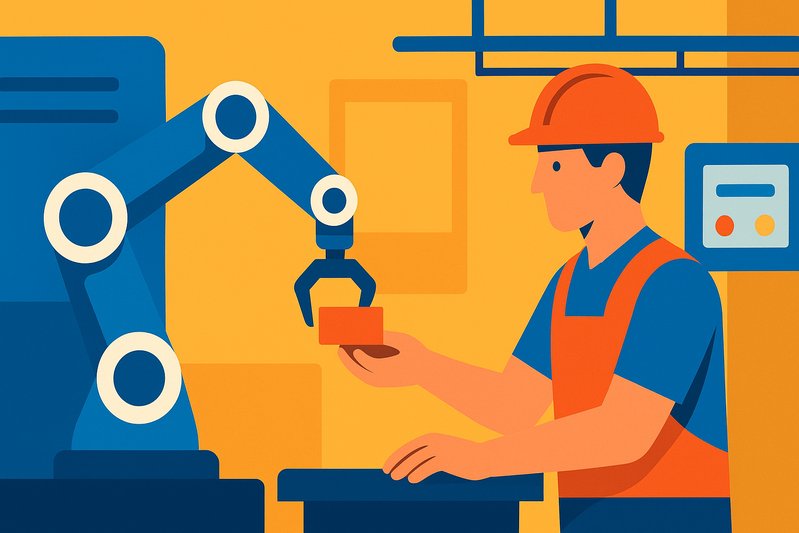
The rapid evolution of technology continues to push the boundaries of automation, reshaping industries and transforming how businesses operate. Leading this charge are collaborative robots, or cobots, which are increasingly becoming the cornerstone of automation strategies in small and medium enterprises (SMEs). Designed to work safely alongside human workers, these technological marvels are redefining operational efficiency and flexibility in manufacturing settings, outpacing traditional robotic automation methods.
The Rise of Cobots: A New Dawn for Automation
In recent years, there has been an unprecedented surge in the adoption of collaborative robots across various industrial domains. The global robotics market is witnessing robust growth, particularly in the segment of cobots, driven by their adaptive nature which meets the dynamic needs of SMEs [1]. Unlike traditional industrial robots that require significant safety measures and infrastructure changes, cobots are designed with safety and flexibility at their core, enabling them to operate harmoniously within existing production lines.
Cobots have captured significant market attention as they facilitate tasks such as machine tending, assembly, and palletizing. These robots offer a lower barrier to entry for small manufacturers, allowing these businesses to enhance productivity without the hefty capital expenditure traditionally associated with automation [8].
Key Drivers for Adopting Cobots in SMEs
Flexibility and Ease of Integration
One of the primary reasons SMEs are gravitating towards cobots is their inherent flexibility. Cobots are crafted to be easily programmed and quickly integrated into existing production environments, a feature that significantly reduces downtime during transitions. This adaptability is crucial for SMEs, which often need to quickly pivot to new production demands without extensive delays or costs.
Additionally, cobots come equipped with intuitive user interfaces and safety features compliant with global standards, such as ISO/TS 15066, further simplifying the implementation process [22].
Enhanced Worker Safety
Cobots are engineered to enhance safety in the workplace, featuring sensors and machine vision to detect and react to human presence and actions. These capabilities not only ensure a safer work environment but also foster a collaborative atmosphere where machines and humans can work side by side without the physical barriers that are common in traditional robotic installations. This fosters improved team productivity as employees engage in more sophisticated and less repetitive tasks [23].
Economic Viability and ROI
The initial investment for cobots is significantly lower compared to conventional robots due to their smaller size and simplified integration process. Furthermore, cobots offer a promising return on investment (ROI) by enhancing production efficiency and reducing manual labor costs. SMEs often witness accelerated ROI as cobots enable continuous operations with minimal intervention, maximizing uptime and productivity [8].
Market Trends and Competitive Landscape
Market Growth and Key Players
As of 2022, global industrial robot installations reached new heights, with collaborative robots reported to particularly outpace traditional robotic arms in terms of percentage growth. Universal Robots remains the market leader, with a substantial installed base and a broad application ecosystem, while competitors in Japan, Europe, and China are closing the gap with advancements in payload capacity, precision, and native safety features [1][8].
Strategic Partnerships and Technological Innovation
Strategic partnerships and the rapid pace of technological innovation are pivotal in the cobot industry’s expansion. Companies are continuously enhancing their offerings with advanced safety and vision capabilities, often through acquisitions and integration of new technologies. Such developments support SMEs in achieving more complex automation objectives and are crucial in maintaining competitive advantage as the market evolves [25].
Challenges and the Path Forward
Despite the promising prospects, certain challenges persist in the adoption of cobots. Regulatory compliance issues, such as meeting the stringent demands of the EU AI Act, and potential supply chain disruptions, especially concerning components subject to geopolitical risks, remain concerns for manufacturers [27][28].
However, the continued refinement of safety standards and the incorporation of emerging technologies like machine learning and enhanced AI will likely mitigate these challenges. These advances promise to expand cobot functionality and reliability, further embedding them as indispensable assets within SMEs.
Conclusion: Cobots as Catalysts for Growth
Cobots represent a pivotal shift in the landscape of industrial automation. For SMEs, they offer a path to enhanced operational efficiency, improved safety, and economic scalability. As cobots continue to evolve, supporting technologies will undoubtedly unlock new possibilities and efficiencies, driving further adoption across diverse industrial sectors. SMEs that embrace cobots today are not only enhancing their current operations but are strategically positioning themselves for future growth in an increasingly automated world.
Cobots are not just machines; they are collaborative partners in the journey towards modern, flexible, and efficient manufacturing processes.