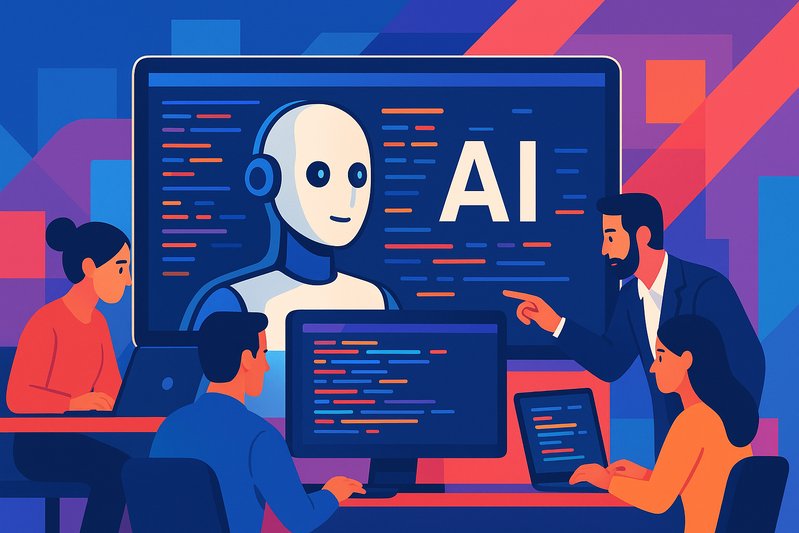
Empowering Enterprises: The GitHub Copilot Implementation Playbook
Insights into Effective Enterprise Implementation Patterns for GitHub Copilot
In the ever-evolving landscape of software development, enterprises are continuously seeking tools that enhance productivity, streamline workflows, and maintain a competitive edge. GitHub Copilot, with its remarkable transformation from a code-completion tool to a comprehensive AI development platform, represents such an innovation. As it evolves from late 2024 through early 2026, Copilot showcases new competencies that make it indispensable for modern enterprises. This article details the strategic playbook for enterprises looking to implement GitHub Copilot effectively.
Navigating the New Capabilities: Copilot’s 2024-2026 Evolution
GitHub Copilot has undergone significant transformations. The assistant is now repository-aware, allowing developers to enjoy multi-file reasoning, agentic workflow automation, and integrated security features. It achieves this by leveraging GitHub code search and code graph signals to create a stable cross-file editing environment.
One standout feature is Copilot Chat, which now spans various IDEs such as VS Code, Visual Studio, and JetBrains. It provides context-aware suggestions, refactoring advice, and test scaffolding by borrowing context from multiple files, not limited to a single file’s scope. This advancement helps developers gain a holistic understanding of code bases quickly.
Copilot Workspace introduces agentic planning, execution, and validation loops, allowing natural language task processing from inception to PR preparation. This feature underscores the importance of iterative validation gates, significantly reducing workflow overheads by integrating repository context, CI outputs, and reviewer feedback seamlessly.
GitHub CLI’s new extension, gh-copilot, brings natural language assistance to terminal workflows, while Codespaces integrates Copilot into pre-configured, ephemeral cloud environments, ensuring consistent access to tools and reducing onboarding time for developers.
Architecture Demystified: How Copilot Works
At the core of Copilot’s operation is a sophisticated architecture utilizing multi-model orchestration and retrieval-augmented generation. These models are hosted on Azure, ensuring enterprise deployment leverages secure, scalable resources with capabilities to handle complex workflows.
Retrieval and Grounding: Copilot intelligently gathers relevant files and symbols using advanced code search algorithms. This ensures that the suggestions it provides are not only accurate but also contextually relevant to the task at hand.
Tool/Function Calling: The platform employs guarded API schemas, allowing interactions that adhere to organizational and security protocols. This is particularly evident in Copilot’s interaction with CodeQL and secret scanning, thus reinforcing secure coding practices through its dynamic feedback mechanisms.
Agent Frameworks: These frameworks allow for plan/execute/validate loops that facilitate comprehensive change proposals, interact seamlessly with repository contexts, and greatly reduce manual validation efforts.
Implementing Copilot in Enterprises: A Strategic Playbook
Identity and Policy Integration
Implementing GitHub Copilot in an enterprise setting begins with identity and policy integration. By capitalizing on SSO/SAML for identity management, enterprises can ensure seamless seat provisioning and maintain strict access controls. Configuring policies around public-code similarity filters, telemetry visibility, and operational surfaces ensures that Copilot operates within well-defined organizational parameters.
Repository Readiness
A robust repository indexing strategy is critical. Enabling GitHub code search and graph indexing ensures Copilot retrieves relevant developmental context efficiently. Additionally, maintaining repository documentation hygiene—such as up-to-date READMEs and test conventions—provides strong anchors for Copilot to generate precise, context-aware suggestions.
Governance and Compliance
Establishing clear governance frameworks is essential. Enterprises should implement policies that enforce human-in-the-loop reviews for AI-generated changes while leveraging tools like CodeQL and secret scanning to maintain a fortified security posture. Least-privilege GitHub Apps and branch protections are vital for maintaining compliance across Copilot-assisted workflows.
Integration in CI/CD Workflows
Embedding Copilot in CI/CD pipelines transforms AI suggestions into governed artifacts. AI-enhanced PR reviews, coupled with required checks such as build, test, and security validations, ensure that AI-generated code meets the quality and security mandates of the enterprise.
Developer Enablement and Change Management
Effective Copilot adoption relies heavily on standardizing developer environments, including IDE setups and plugin configurations. Starting with champion teams and incrementally documenting successful workflows in internal playbooks ensures widespread and effective use of Copilot across the organization. Phased rollouts with pilot tests on mature repositories allow for smooth integrations and capacity to handle new Copilot functionalities as they are released.
Conclusion: Key Takeaways
The evolution of GitHub Copilot presents remarkable opportunities for enterprises to enhance their development workflows with AI-assisted precision and efficiency. The strategic implementation of features like repository-aware assistance, workflow automation, and robust security protocols positions enterprises to harness these capabilities to their fullest potential.
Organizations are encouraged to embrace a comprehensive adoption strategy that meticulously integrates identity management, repository readiness, governance, developer enablement, and change management. By doing so, enterprises can expect enhanced developer productivity, faster time-to-market, and a strengthened security posture. As GitHub Copilot continues to evolve, staying abreast of its advancements through resources like the GitHub Changelog will be essential for maintaining a competitive edge.
For more detailed guidance and resources on deploying GitHub Copilot within your enterprise, explore the GitHub Copilot documentation and embrace the transformative potential of AI in software development.