Ensuring Compatibility: The Backbone of Success in Platform Migrations
Navigate the Critical Issues of API, SDKs, and Data Schema Compatibility in Migrations
Platform migrations are a pivotal moment for any organization looking to leverage new technologies, better performance, and expanded capabilities. However, the road to a successful migration is fraught with challenges, especially around compatibility considerations. The key to a seamless transition lies in rigorous planning and analysis, particularly concerning APIs, SDKs, and data schemas.
Understanding the Compatibility Puzzle
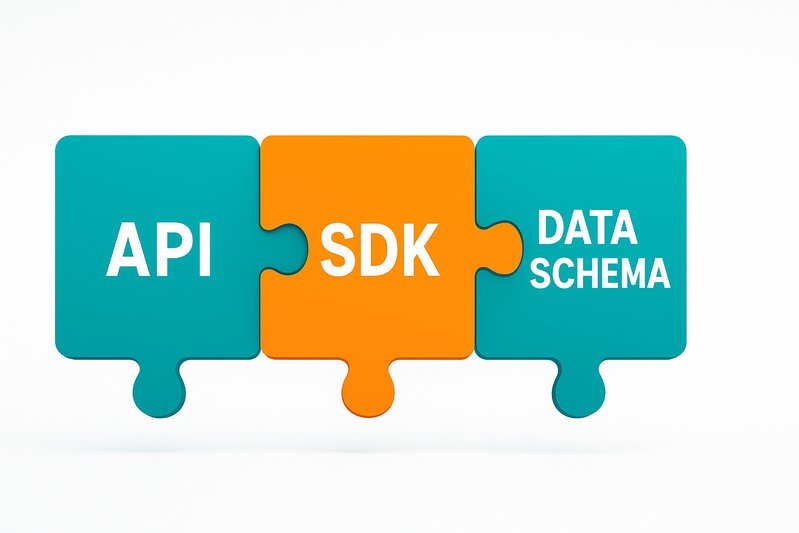
When organizations migrate from a legacy system to a new platform like “Info,” ensuring compatibility is not just a technical requirement but a foundational necessity. Migration efforts often get derailed due to unforeseen compatibility issues that arise due to differences between the systems involved. Key areas requiring attention include APIs, SDKs, and data schema compatibility.
APIs and SDKs: Setting the Groundwork
APIs and SDKs form the backbone of application integrations and functionality. During a platform migration, it’s crucial to inventory all public and private APIs to ensure seamless integration. Utilizing a contract-first approach with standards like OpenAPI or Protocol Buffers can provide clarity and reduce risk by ensuring that compatibility issues are identified and addressed early in the migration process [10][11]. Temporary compatibility shims and client SDK adapters are often required to bridge gaps between old and new systems, maintaining operational continuity and minimizing disruption to the user experience.
Data Schemas and Online Migrations
Data migrations involve complex changes that can’t afford downtime or data loss, particularly when dealing with live, critical data. The expand/contract pattern is widely recommended for database schema changes to ensure backward compatibility. This approach involves gradually changing database schemas in a way that supports existing system functionality until the migration is complete [12][15]. For relational databases, tools like gh-ost and pt-online-schema-change facilitate these transitions with minimal disruption, orchestrating complex schema changes while keeping databases operational [13][14].
Strategic Approaches to Migration
Phased Strangler Replacement
The phased strangler strategy is particularly effective in reducing migration risk. By gradually routing selected endpoints, domains, or user cohorts to “Info,” teams can implement new capabilities without abruptly cutting off the legacy system. This approach is well-suited for systems with tight coupling and extensive integrations, allowing for learning and adaptation in each phase without incurring the high risk of a big-bang migration [1].
Blue-Green and Canary Releases
Techniques like blue-green deployments and canary releases mitigate risk by maintaining multiple live versions of the platform. This enables instant rollback if necessary and allows teams to monitor the new platform under real-world conditions with minimized impact. Tools such as Argo Rollouts facilitate these processes by automating traffic management and rollback scenarios based on pre-defined SLOs (Service Level Objectives) [24].
Key Considerations and Best Practices
Authentication and Identity Management
Standardizing authentication and authorization mechanisms, such as using OAuth 2.0 and OpenID Connect, is crucial for maintaining security and compatibility [17][18]. Migrating user and service identities seamlessly with secure token and session management ensures that applications maintain trust levels across both old and new systems.
Observability and Monitoring
Ensuring robust observability and monitoring is critical to troubleshoot and optimize the migrated platform. Instrumenting services with tools like OpenTelemetry provides consistent traces, metrics, and logs, crucial for tracking down compatibility issues and performance bottlenecks [36]. This visibility helps ensure that the migration process does not negatively impact user experience or system efficiency.
Legal and Compliance Adherence
Adhering to compliance and legal requirements is paramount during migrations. Whether managing data under GDPR or PCI DSS v4.0, teams must ensure that the migration strategy accommodates all regulatory needs without compromising data integrity or security [32][30]. Mapping these requirements into the technical migration plan right from the start can prevent costly oversights.
Conclusion: Navigating Platform Migration Successfully
In conclusion, platform migrations require careful attention to compatibility issues spanning APIs, SDKs, data schemas, authentication, and observability. By leveraging strategies like phased strangler replacement and blue-green deployments, organizations can significantly reduce risks and ensure smoother transitions. Attention to compliance, coupled with a modern, agile approach to delivery, forms the backbone of a successful migration strategy.
Aligning technical tactics with organizational readiness ensures these complex projects not only meet functional criteria but also enhance business capabilities, paving the way for future innovations.
Sources & References
