Federated Learning: Collaborative AI without Compromising Data Privacy
How Federated Learning is Revolutionizing Data Collaboration in Sensitive Environments
In today’s data-driven world, the balance between innovation in artificial intelligence (AI) and the protection of sensitive information has never been more crucial. As organizations strive to harness the power of AI, they often face the challenge of accessing valuable data while maintaining rigorous privacy standards. Here enters federated learning, a revolutionary approach that allows for collaboration across data silos without compromising privacy.
Understanding Federated Learning
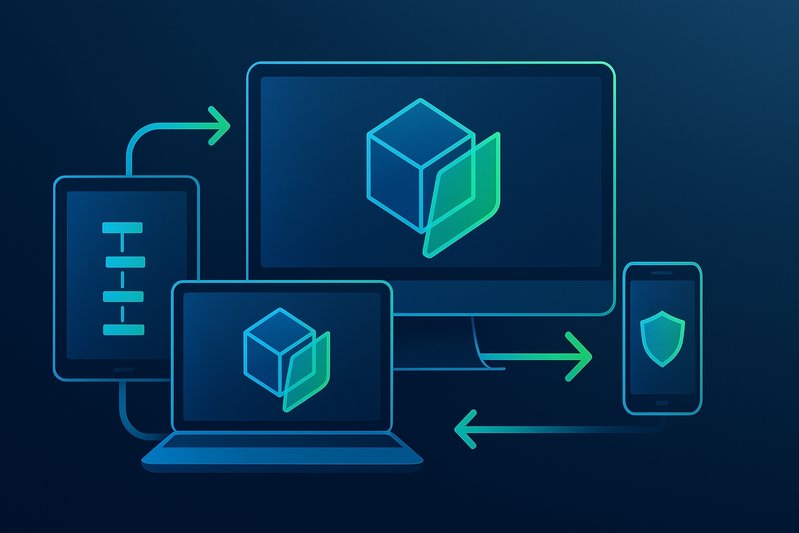
Federated learning is a technological strategy that enables machine learning models to be trained across multiple decentralized devices or servers holding local data samples, without exchanging them. This approach mitigates privacy concerns by ensuring that sensitive data never leaves its source location. Instead, only model updates, not the data itself, are shared, aggregated, and deployed to improve a central AI model.
The concept of federated learning made significant strides through frameworks like TensorFlow Federated and PySyft, facilitating efficient communications in cross-device settings and beyond (11, 12). Such frameworks have paved the way for the adoption of federated learning in sensitive environments like healthcare and finance, where data privacy regulations are stringent.
Key Applications in Sensitive Industries
Healthcare
In healthcare, federated learning is transforming the landscape by allowing researchers and practitioners to collaboratively train AI models using health data that remains within its respective institution. This is crucial in enabling large-scale studies across institutions while complying with privacy mandates such as the Health Insurance Portability and Accountability Act (HIPAA) in the United States (42).
Financial Services
Similarly, in financial services, federated learning opens new avenues for detecting fraud and enhancing risk management without the risk of data exposure. Banks and financial institutions can leverage proprietary transactional data to enhance security algorithms collaboratively, which is increasingly important as data governance is tightened under frameworks like the EU AI Act (2).
Privacy-Enhancing Technologies Supporting Federated Learning
The effectiveness of federated learning is augmented by other privacy-enhancing technologies (PETs). Differential Privacy (DP) and secure multi-party computation (MPC) are often integrated to ensure that outputs of AI applications are statistically protected (1). These technologies help balance the trade-offs between data utility and privacy, an ongoing challenge in AI deployments.
Advanced techniques like differential privacy are being fine-tuned to reduce utility loss during data processing, as seen in Google’s and Apple’s implementations of local differential privacy in telemetry and analytics (9, 10). Federated learning takes privacy assurance further by employing secure aggregation, which ensures that even model updates do not reveal individual data samples.
Challenges and Future Directions
While federated learning has shown promise, it is not without its challenges. The complexity of orchestrating training across diverse and distributed systems presents scalability and synchronization hurdles. Moreover, threats such as adversarial attacks and model inversion, which seek to reverse-engineer inputs from model outputs, remain persistent concerns (29, 30).
Looking ahead, the focus will be on enhancing the robustness of federated learning systems against these threats. This includes the ongoing development of federated multi-cloud ecosystems that support uniform attestations and policy integrations, thereby broadening the applicability and resilience of federated learning (17).
Conclusion
Federated learning represents a significant step forward in the quest to unlock the potential of AI in sensitive environments without sacrificing privacy. By allowing data to remain at its source, this approach not only mitigates privacy risks but also supports the principles of data sovereignty and compliance with prevailing regulatory frameworks. As federated learning continues to mature, supported by robust frameworks and integration with other PETs, it holds the promise of a future where collaborative AI advancement and data privacy coexist harmoniously.
In this new era of AI, organizations that adopt federated learning stand to gain not only technological advantages but also a competitive edge through enhanced trust and compliance with privacy standards. The journey towards collaborative AI without compromising data privacy is just beginning, and federated learning is at the forefront of this exciting evolution.