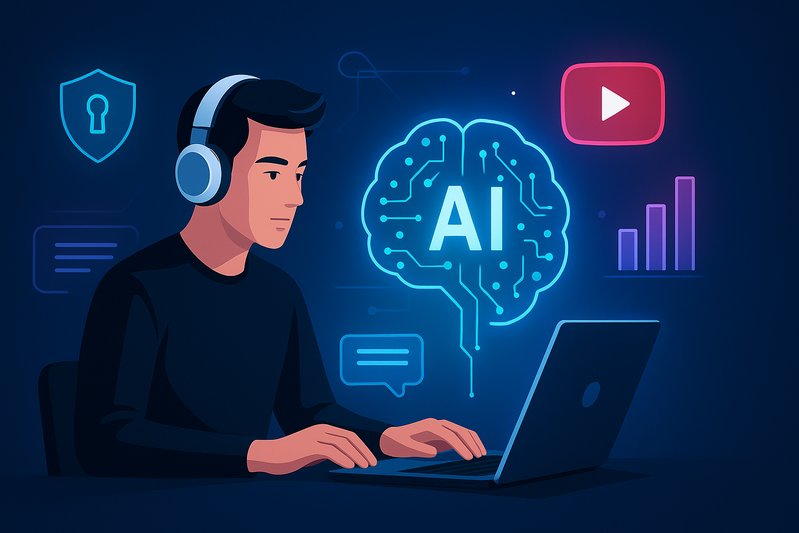
From YouTube to Android: Google’s AI-driven Evolution
Subtitle: Discover how AI is transforming content creation on YouTube and advancing privacy in Android devices.
In the realm of technological innovation, few companies are as pivotal as Google. With a comprehensive strategy intertwining artificial intelligence (AI) across its suite of services, Google is poised to redefine user experiences from YouTube’s dynamic content creation tools to Android’s enhanced privacy measures. As we step into 2026, these advancements represent significant strides towards a more integrated and intelligent digital ecosystem.
The AI Transformation of YouTube
YouTube has been at the forefront of digital content for years, and AI is now set to revolutionize how creators develop and monetize their content. Google’s AI initiatives have provided creators with innovative tools such as Dream Screen and Imagen, which integrate sophisticated image and video generation capabilities directly into the YouTube platform ((https://blog.youtube/news-and-events/made-on-youtube/)). These tools allow creators to produce high-fidelity media with ease, fundamentally enhancing the creative process.
The introduction of AI-driven features doesn’t stop at content creation. YouTube is also enhancing e-commerce capabilities within its platform. By integrating product tagging, affiliate marketing, and catalog synchronization, creators can now produce fully shoppable videos ((https://support.google.com/youtube/answer/12257433)). This stands to transform the platform into a robust marketplace, working seamlessly with these AI tools to facilitate end-to-end commerce within content.
Additionally, YouTube’s focus on rights and authenticity through AI-empowered frameworks could see more effective management of music and video rights, ultimately benefiting creators and protecting intellectual property while optimizing the monetization process ((https://blog.youtube/news-and-events/ai-music-principles/)). This AI-native studio approach from idea conception to upload ensures compliance with policy and promotes authenticity in content creation.
Advancing Privacy in Android
While YouTube explores new frontiers in content creation, Android’s focus is on enhancing privacy and performance through on-device AI capabilities. With the implementation of Gemini Nano in AICore, Android devices can perform complex AI tasks without the need for a network connection, thus preserving user privacy ((https://developer.android.com/ai/gemini-nano)). This is a paradigm shift in mobile computing, offering instantaneous, private, and highly efficient AI functionalities directly on devices.
The roll-out of system-level AI through Android is supported by Google’s ML Kit GenAI and Prompt API, which facilitate tasks like private summarization and image description, further pushing the boundaries of what mobile devices can achieve autonomously ((https://developer.android.com/ai)). These developments also contribute to enhancing accessibility for users, making Android devices smarter and more intuitive.
The Broader Impact: AI in Google’s Ecosystem
Google’s strategic deployment of AI goes beyond just YouTube and Android. Across its services, Google is establishing an “agentic platform,” a robust ecosystem designed to enhance user interaction through conversational AI elements. These advancements are also evident in Google Maps and Search, which are integrating AI for more personalized and in-depth user experiences ((https://blog.google/products/ads-commerce/google-search-ai-brand-discovery/)).
The Privacy Sandbox, a central element in Chrome’s evolution, demonstrates Google’s commitment to harmonizing privacy with user personalization. As AI integrates deeper into Google’s platforms, managing privacy risks while enhancing user experience remains paramount ((https://developer.chrome.com/docs/privacy-sandbox/feedback/report-2023-q3/)). Google’s push towards sustainable, private, and efficient AI not only bolsters user trust but also sets a benchmark for responsible AI deployment.
Conclusion: AI as the New Norm
As 2026 unfolds, Google’s AI revolution is reshaping the digital landscape. From YouTube’s advanced content creation tools to Android’s privacy-focused on-device AI, Google is not just embracing AI but is recharting the course of interaction across its platforms. These initiatives reflect a broader vision where AI becomes seamlessly integrated into daily digital life, prioritizing user privacy, enhancing creativity, and advancing utility. For tech enthusiasts and creators alike, the future with Google promises a landscape of innovation marked by intelligence and integrity.
Google’s forward-looking implementations illustrate not just technological advancement but a commitment to leveraging AI for enhanced user experiences, setting a precedent for the future of digital ecosystems.