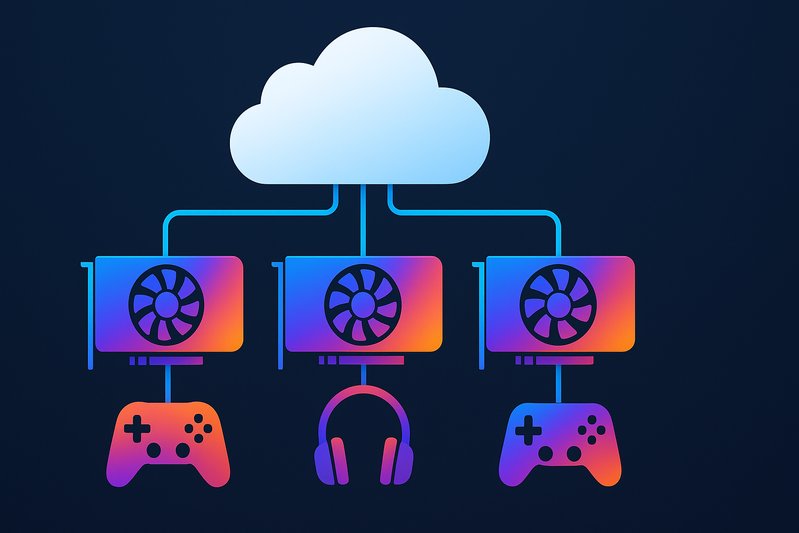
Game Streaming in the Cloud: GPU-Powered Innovation and Cost Realities
Understanding the Robust Infrastructure Behind Cloud-Enabled Game Streaming
The realm of gaming has evolved beyond traditional console and PC experiences, with cloud-enabled game streaming emerging as a powerful frontier. This high-tech advancement allows users to engage in complex games without needing high-end hardware, thanks to sophisticated cloud computing infrastructures and graphics processing units (GPUs). As game streaming garners mainstream attention, understanding the underlying technologies and economic implications becomes essential.
The Dual Facets of Game Streaming
Game streaming can be segmented into two primary workloads with unique latency, scale, and cost structures: live game streaming and cloud gaming.
Live game streaming involves broadcasting gameplay footage to an audience, typically using creator tools and platforms like Twitch or YouTube. This type of streaming requires robust software and hardware codecs to capture and encode gameplay, along with CDNs (Content Delivery Networks) for global distribution (1, 2).
Cloud gaming shifts the gaming experience entirely to cloud-based servers where the actual game rendering occurs remotely. Game graphics and responses to player actions are rendered on GPU servers and streamed back to players who interact in real-time. This setup requires extremely low latency to achieve a seamless player experience, emphasizing the role of high-performance GPUs (6, 8).
Infrastructure: Codecs and Protocols
A critical component of game streaming is the use of efficient codecs. While AVC/H.264 remains universally supported, emerging codecs like AV1 offer 20-30% bitrate savings at similar quality, making it an attractive option for platforms seeking to optimize costs (4, 7). With modern browsers and mobile systems already supporting AV1, the codec’s adoption is accelerating (5).
Protocols like WebRTC enable the low-latency interactions necessary for cloud gaming and have set the standard for real-time communication. WebRTC provides end-to-end encryption and a high degree of reliability, which is crucial for maintaining the player’s real-time control of game rendering across networks (16). Meanwhile, protocols such as SRT and RIST offer reliable transport for video streams, ensuring consistent quality over potential network disruptions (9, 10).
Exploring the Economics: Cost Implications
The cost structure of game streaming differs significantly based on the chosen architecture. Traditional HTTP-based streaming (like LL-HLS/DASH) uses CDN caching strategies that keep costs associated with bandwidth usage manageable. Conversely, WebRTC-based real-time interactions, fundamental to cloud gaming, necessitate a stateful infrastructure possibly running on costly, high-performance GPU servers (12, 13).
Significant advancements like AV1 codec efficiency can help reduce egress costs by compressing data more effectively, lowering the bandwidth required to deliver high-quality streams. This is particularly beneficial when serving high-motion content where maintaining visual fidelity is challenging but necessary (4, 6).
The Role of GPUs in Game Streaming
GPUs form the bedrock of cloud gaming, powering the intensive graphics rendering tasks traditionally handled by local hardware. Cloud service providers are deploying GPU-powered instances capable of rendering end-to-end game graphics efficiently. These include offerings from AWS, Azure, and GCP, which provide high-performance GPU options for developers to build and scale cloud gaming services (39).
Hardware stacks made possible by NVIDIA, AMD, and Intel have integrated real-time codec support, ushering in an era where complex, immersive games can be streamed to nearly any device, from smart TVs to smartphones without latency issues (6, 7).
Conclusion: The Future of Game Streaming
As we progress towards 2026, the game streaming landscape will likely continue to evolve, balancing the demands of low latency, cost efficiency, and mass scalability. Technologies like AV1 and mature WebRTC infrastructures will set the stage for innovations in how we distribute and interact with game content globally. Selecting the appropriate architecture depends on a platform’s target latency, audience scale, and economical weathering, indicating a future where cloud gaming platforms will continue to innovate by leveraging cutting-edge GPU capabilities and efficient streaming protocols.