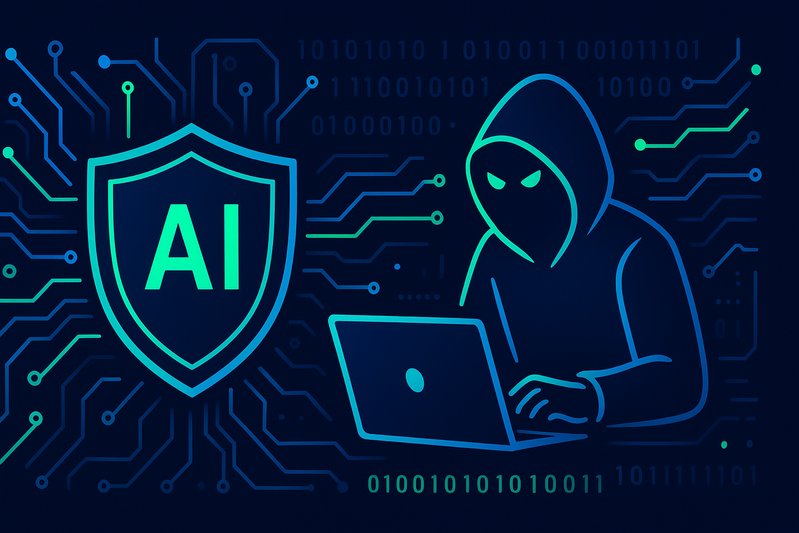
Harnessing the Power of AI in Cybersecurity
How AI Technology is Reshaping Offense and Defense Strategies in 2026
Introduction: The AI Surge in Cybersecurity
In 2026, artificial intelligence (AI) is no longer just a tool—it’s an integral weapon in the cybersecurity arsenal. Both defenders and attackers leverage AI, creating a digital battleground richer in complexity and stakes than ever before. With the average eCrime “breakout time” reduced to merely 79 minutes, swift detection and automated response powered by AI are not just advantages—they’re necessities for survival in this cyber warfare landscape.[19] The cybersecurity industry is witnessing a paradigm shift where AI indeed plays a dual role—bolstering defenses while simultaneously enabling more sophisticated attacks.
AI-Driven Defense: A Game Changer for Cybersecurity
The incorporation of AI into cybersecurity strategies has reshaped defensive postures profoundly. This transformative impact can be seen through improved threat detection, enhanced incident response times, and overall risk reduction.
Enhanced Detection and Response
AI tools excel in identifying patterns and anomalies in vast datasets, offering unparalleled threat detection capabilities.[19] For instance, AI-enabled Endpoint Detection and Response (EDR) systems significantly curtail the median dwell time to about ten days, which is a drastic reduction that empowers organizations to react faster to breaches.[18]
Automation and Efficiency
With AI, cybersecurity operations become increasingly automated. Automation reduces the operational burden on human analysts, who can then focus on more complex threat analysis and strategic planning. AI systems can swiftly enact containment protocols—isolating breached components within seconds—paving the way for more fortified incident management.[48]
AI as the Threat: Amplifying Attacks
While fortifying defenses, AI equally empowers attackers, making threat landscapes more volatile. AI’s dual-use nature presents new challenges in dealing with adversaries who use the same potent technology to exploit vulnerabilities and craft more refined and potent attacks.
AI-Enhanced Social Engineering
Adversaries now deploy AI models to execute highly targeted and adaptive social engineering attacks. By analyzing vast amounts of data, these models can produce personalized phishing messages that are difficult for individuals to differentiate from legitimate communications.[17]
Automated Attack Tools
AI allows attackers to leverage tools that automatically scan for vulnerabilities and execute exploits with minimal human intervention. These tools can learn from each successful breach and evolve strategies for subsequent attacks faster than traditional methods ever could.[10]
Balancing Defense Strategies with Regulation
As AI integrates deeper into cybersecurity, regulators also emphasize its role in shaping compliance requirements. Regulations like NIST CSF 2.0 and the EU Cyber Resilience Act push organizations to adopt AI-driven defenses as standard practice, ensuring compliance frameworks evolve to meet these technological advances.[1][37]
Conclusion: Transformative Potential and Future Directions
AI’s role in cybersecurity is both revolutionary and paradoxical. By 2026, organizations realize that leveraging AI for security is non-negotiable. This sophisticated technology not only detects and neutralizes threats with unprecedented speed and accuracy but, if unchecked, can also be a formidable tool for cyber adversaries.
The future beckons better AI governance and frameworks that dictate its responsible use in cybersecurity. Embracing AI while managing its misuse will ultimately differentiate resilient security programs from vulnerable ones, potentially redefining the fabric of cyber defense strategies worldwide. Understanding AI’s duality remains essential for forging robust defenses, nurturing a security culture that thrives amidst evolving threats.
Organizations must continually pivot, adopting AI-driven paradigms that focus on pre-emptive threat intelligence and rapid response measures, ensuring cybersecurity strategies evolve in lockstep with technological advancements.
The incorporation and regulation of AI in cybersecurity are pivotal to navigating a world where technology shapes every facet of security, transforming AI from a decision-support tool into a central pillar of cybersecurity policy.