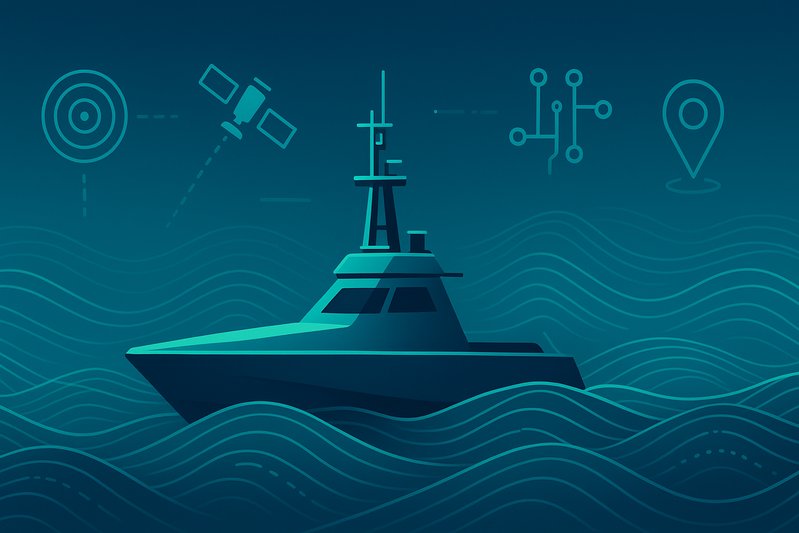
Maritime Journeys Unmanned: The Autonomy Wave
How Maritime Autonomy and Unmanned Surface Vessels Are Navigating the Tides
In recent years, the maritime industry has found itself cresting the waves of a transformative technological shift. As the world’s waterways become bustling corridors of trade and travel, the advent of maritime autonomy presents an intriguing trajectory toward efficiency and sustainability. At the forefront of this movement are uncrewed surface vessels (USVs), which are set to redefine the future of maritime operations.
The Rise of Autonomous Maritime Technologies
In the span of less than a decade, maritime autonomy has charted a remarkable course. According to the “Autonomous Systems in 2026” report, advancements in maritime autonomy have been powered by the integration of multimodal perception systems, enhanced sensor fusion, and the development of richly instrumented simulations. These advancements are ushering in an era where USVs, unbound by human limitations, can execute complex tasks with unprecedented precision and endurance.
Multimodal Perception: At the heart of these autonomous vessels is a sophisticated perception system that blends radar, AIS (Automatic Identification Systems), and advanced vision technologies. This suite of sensors provides USVs with a robust situational awareness necessary for navigating crowded and often unpredictable waters.
Sensor Fusion: Through learned sensor fusion, USVs can process vast amounts of data to form a cohesive understanding of their environment. Combined with closed-loop planning systems, this technology ensures that USVs can operate effectively even in open seas, where conditions are subject to rapid change.
Commercial Deployment and Economic Impact
USVs are not mere prototypes—they are already making waves in commercial operations. Saildrone, a leader in autonomous maritime technologies, has deployed fleets for long-term oceanic data collection missions. These USVs have logged thousands of sea miles, collecting crucial data for climate research and maritime domain awareness, at a fraction of the cost of traditional crewed vessels.
This economic advantage is largely due to the ability of USVs to remain operational for weeks or even months without requiring human intervention. The reduction in manpower and operational costs is particularly valuable for applications such as environmental monitoring, maritime security, and hydrographic surveys.
Navigational Autonomy and Safety Regulations
As the industry shifts towards autonomy, regulatory frameworks are adapting to keep pace. The International Maritime Organization (IMO) has made significant strides with the Maritime Autonomous Surface Ships (MASS) initiative. The IMO’s proposed MASS Code aims to establish standards for different levels of autonomy, ensuring safe and standardized operations across international waters.
Collision Avoidance and Compliance: One of the paramount concerns in maritime autonomy is compliance with international regulations, such as the COLREGs (International Regulations for Preventing Collisions at Sea). Advanced navigation and collision avoidance systems, like those developed by Sea Machines, provide autonomy-assist features in existing vessels, enhancing safety by mitigating human error in collision-prone scenarios.
The Road Ahead: Challenges and Opportunities
Despite these groundbreaking advancements, the path to full maritime autonomy is riddled with challenges. Statistical Safety Assurance remains a critical obstacle, requiring robust methodologies to validate that autonomous vessels consistently outperform their human-operated counterparts.
Moreover, cyber-physical security poses a significant risk. Ensuring that USVs are resistant to cyber threats and can maintain operability under various conditions is crucial to their widespread adoption. Additionally, environmental considerations, such as energy consumption and emissions, need to be addressed as autonomous systems rely on extensive computational power.
Conclusion: The Future Set Sail
The journey towards maritime autonomy is as vast and unpredictable as the seas themselves. However, the potential benefits—ranging from economic efficiency to enhanced safety and sustainability—are significant. As regulatory frameworks solidify and technology continues to advance, uncrewed surface vessels stand poised to dominate the maritime landscape.
As we peer into the horizon, the question is not whether maritime autonomy will take hold, but how swiftly we can navigate towards its promise of safer, smarter, and more sustainable maritime operations. With careful stewardship and continued innovation, the autonomy wave will ensure our maritime journeys remain resilient and prosperous.