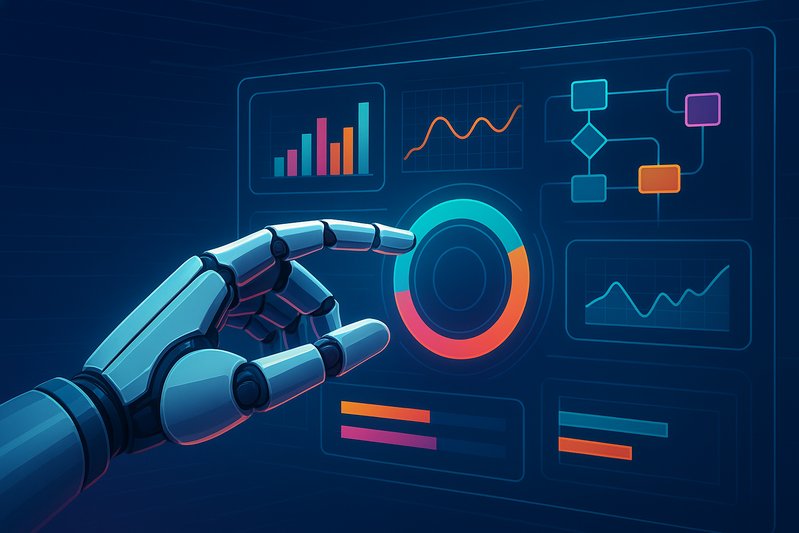
Navigating the Future of Task Automation with Claude: A Practical Guide
Introduction
As businesses continue to automate, the need for advanced solutions like artificial intelligence (AI) has become more paramount. Claude AI by Anthropic represents a leap forward in task automation through its robust API and tool capabilities. By 2026, leveraging Claude will be essential for organizations aiming to streamline processes while maintaining reliability and cost efficiency. This guide offers a practical overview of deploying Claude AI for future-ready task automation, exploring how it empowers enterprises through structured workflows, tool integrations, and optimized operations.
Understanding Claude’s Capabilities
Claude’s Messages API serves as the crucial interface for AI interactions, supporting multi-turn conversations, tool usage, and long-context models. This API organizes communications into structured blocks, enhancing predictability and composability. By utilizing JSON Schema for structured outputs, Claude reduces parsing errors and ensures determinism in task automation. This approach allows businesses to standardize outputs for high-volume operations, ensuring precision and reliability in data handling.
Key Features of Claude’s Architecture
Claude introduces a series of functionalities that redefine task automation:
- Messages API: Acts as a backbone for all model interactions, supporting structured outputs and tool invocations.
- Structured Outputs: These outputs use JSON Schema for validation, reducing errors and supporting deterministic evaluations.
- Streaming and Batching: Streaming provides partial outputs for interactive tasks, while batching aligns workload throughput with minimal overhead.
These features, combined with tools and function calling capabilities, enable organizations to automate tasks with resilience and efficiency.
Strategic Implementation Across Workflows
Real-Time Automation
For applications that demand immediate responsiveness, like customer support chatbots, Claude’s streaming and parallel tool execution capabilities are critical. By emitting multiple tool_use blocks that can be processed concurrently, Claude minimizes latency and improves throughput. Real-time automation benefits from prompt caching, which saves stable content to enhance performance metrics significantly.
Batch Processing
When managing large data sets, batch processing ensures cost-effective operations. Claude’s message batches allow substantial jobs to run efficiently by reducing per-request overhead and adhering to throughput targets. This functionality is particularly beneficial for back-office operations where processes need to be reliable and predictable.
Enterprise RAG and Knowledge Management
Claude supports a retrieval-augmented generation (RAG) system through lightweight attachments and managed knowledge bases. This integration ensures that enterprises can handle large or regulated knowledge demands effectively, utilizing AWS Bedrock’s capabilities for standardized safety and compliance.
Implementation Strategies
Security and Compliance
Implementing Claude requires stringent security measures. Data usage, retention policies, and audit logs are crucial for maintaining privacy and compliance. Using the appropriate SDKs, such as Anthropic’s for Python and JavaScript, businesses can securely integrate Claude AI into their systems while ensuring that sensitive data, like PII, is protected and redacted as necessary.
Optimization for Cost and Performance
Optimization involves minimizing context footprints, using model routing, and enforcing schema-constrained outputs. These strategies help balance performance, reducing costs while maximizing automation efficiency. Pinning model versions and using metrics to track token usage and cache hit rates provide ongoing insights for continuous improvement.
Conclusion
Claude AI represents a significant advancement in task automation, offering features that provide both flexibility and efficiency for enterprises. By adopting new frameworks like the Messages API, tool integrations, and structured outputs, businesses can future-proof their operations and streamline workflows. Organizations must prioritize security and continue to adapt Claude’s evolving capabilities, ensuring they remain at the forefront of AI-driven automation by 2026 and beyond. Companies ready to integrate these capabilities will likely see substantial improvements in both operational costs and strategic output.
Claude’s robust set of features, combined with a keen understanding of task-specific implementations, positions it as a vital part of any organization looking to excel in an automated future.
Key Takeaways
- Messages API and Tools: Claude’s architecture allows smooth integration of tasks across varying volumes and complexities.
- Structured Outputs and Security: Organizations benefit from reliable and valid outputs while maintaining stringent security practices.
- Optimization Practices: Effective management through prompt caching and parallel execution significantly enhances performance and reduces costs.
Claude offers a sophisticated approach to task automation, ensuring that organizations are equipped for the challenges and opportunities of a rapidly evolving technological landscape.
Sources
-
Messages API (Reference) This source details the API’s capabilities essential for implementing Claude’s advanced features, which underpin automation efforts.
-
Tool Use (Docs) Provides key insights into how tools can be effectively employed within Claude’s ecosystem to enhance automation tasks.
-
Structured Outputs (Docs) Offers guidance on structured outputs in Claude, vital for ensuring deterministic and error-free task processing.
-
Prompt Caching (Docs) Explains techniques for caching prompts, which are crucial for optimizing performance and reducing costs in automation.
-
Streaming (Docs) Essential for understanding how streaming can enhance task responsiveness, a critical component of real-time automation.
-
Message Batches (Docs) Relevant for its explanation of batch processing, an efficient technique for handling large-scale data within Claude’s framework.
-
Attachments/Files (Docs) Crucial for comprehending how Claude handles external files, supporting comprehensive data integration strategies.
-
AWS Bedrock Knowledge Bases This source speaks to how AWS assists in managing large volumes of data effectively through Claude, supporting enterprise automation.
-
Data Usage and Retention Discusses the data handling policies that ensure safe and compliant Claude implementation.
-
Anthropic Python SDK (GitHub) This is critical for developers implementing Claude AI in Python, providing foundational SDK resources for integration strategies.
-
Anthropic JS/TS SDK (NPM) Important for practitioners implementing Claude in JavaScript, aiding in enterprise-wide AI deployment.
Sources & References
