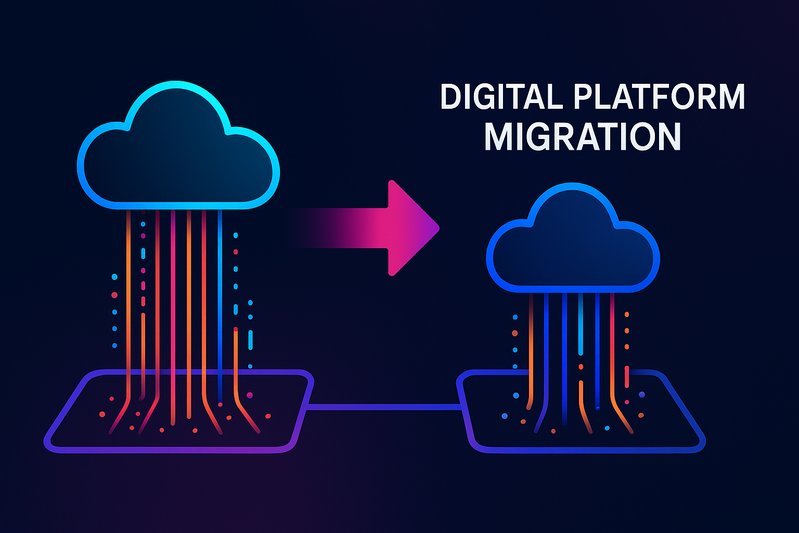
Observability-Driven Platform Migration: Ensuring Performance and Security
Transitioning to a new platform can be a daunting task, fraught with challenges ranging from data compatibility to maintaining system availability. In the realm of technology migration, where speed often contends with the need for safety, observability plays a critical role in maintaining performance and security. So, how can organizations harness observability tools effectively during platform migrations?
The Role of Observability in Migration
Observability encompasses the tools and methodologies that allow developers to monitor, trace, and analyze systems seamlessly. During platform migration, it ensures functional parity and mitigates performance risks by observing the system’s state and behavior. Offering transparent insights into systems’ operations, observability helps in detecting anomalies that could compromise security or performance post-migration.
Transition Strategies Integrating Observability
Phased Strangler Replacement
A phased strangler strategy incrementally transitions services by redirecting a portion of traffic from legacy systems to the new platform. This approach benefits from observability by identifying system inefficiencies early on, limiting potential disruptions [1]. With compatibility shims and layered service monitoring, organizations can navigate integration complexities while monitoring system health continuously.
Blue-Green and Canary Releases
Both blue-green and canary releases are widely recognized strategies for software deployments that balance risk with flexibility. In a blue-green setup, organizations maintain two distinct environments: one active, and one as a ready standby. A canary release gradually introduces changes to a small segment of users, expanding if no issues arise [2]. Through observability, these strategies leverage real-time metrics to make informed decisions, allowing for swift rollbacks on failure detection.
Shadow Traffic Mirroring
For critical operations like payment processing, shadow traffic—or mirroring—is crucial. It involves routing production-like traffic through new systems without affecting end-users, providing a secure way to validate system performance against older benchmarks [5]. Observability offers transparency in this process, ensuring functional consistency by comparing outputs and uncovering discrepancies.
Compatibility and Security Considerations
APIs and SDKs
The success of platform migration largely depends on thorough compatibility checks, especially within APIs and SDKs. Observability aids in this aspect by ensuring systems adhere to predefined compatibility standards, backed by open API specifications, mitigating abrupt service interruptions [10].
Authentication and Permissions
Migrating authentication protocols presents another layer of complexity, especially when shifting to OAuth 2.0 or OpenID Connect. Observability helps in real-time tracking of authentication flows, allowing for early detection of unauthorized access attempts, thus strengthening security during critical transition phases [17].
Data Layer Management
The migration of data schemas demands careful handling to minimize downtime and data loss risks. While logical replication and dual-write mechanisms are vital, observability tools provide the added layer of verification through metrics and logs, highlighting schema misalignments before they become critical [15].
Conclusion
The interplay between observability and platform migration cannot be overstated. By embedding observability into migration strategies, organizations can ensure a seamless transition, preserving both performance and security across systems. As businesses strive towards more agile infrastructures, investing in comprehensive observability tools—not only minimizes transition risks but also lays down a resilient foundation for future operations.