Robotics Revolutionizes Logistics and Beyond in 2026
From Sci-fi to Reality: Humanoids and Autonomous Systems at the Forefront of Industrial Change
In the year 2026, the line between science fiction and reality continues to blur. With rapid advancements in robotics and autonomy, we are witnessing transformative changes across various industries, especially in logistics and manufacturing. This technological evolution is a testament to the imagination ignited by sci-fi narratives that have inspired engineers and scientists to transform dreams into tangible innovations.
The Leap from Fiction to Functionality
The parallels between science-fiction themes and current technological advances are remarkably prominent in 2026. Sci-fi depicting always-on agenic AI, humanoid robots, and advanced autonomy is translating into real-world deployments. The integration of multimodal AI agents in enterprise workflows, the scaling of autonomous logistics operations, and the formal approval of gene-editing therapies are just a few examples of how far these technologies have come.
Autonomous Robotics in Logistics
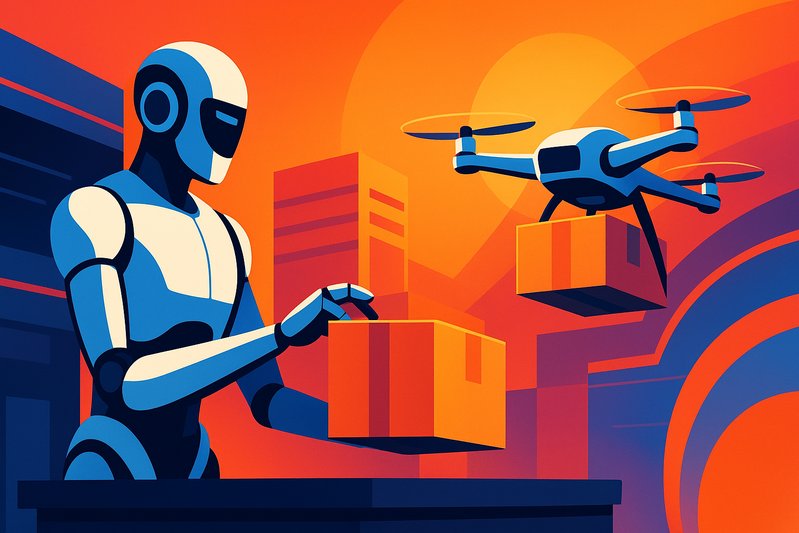
Robots, especially humanoid forms, are becoming more prevalent in logistics and manufacturing. The rise of scaled autonomy in logistics corridors, powered by advanced autonomy stacks, is reshaping the efficiency with which goods are transported and managed. Notable advancements include Zipline’s beyond-visual-line-of-sight (BVLOS) networks, which have been approved in multiple countries for high-frequency delivery operations, proving the viability of autonomous systems in constrained environments like warehouses and campuses.
Platform innovations also play a crucial role. NVIDIA’s robotics platform provides a standardized ecosystem that allows for faster development cycles from perception to policy implementation. The systemization of robotic development through shared tools and simulation platforms drives the industry closer to the sci-fi dream of robots seamlessly integrated into everyday tasks, although challenges in dexterity and overall reliability persist.
AI and Multimodal Agentic Systems
In 2026, the foundations laid by multimodal AI models, such as OpenAI’s GPT-4o, are pushing the boundaries of real-time interactivity within agent systems. These systems, capable of parallel processing text, audio, and visual inputs, enable previously unimaginable levels of automation in customer interaction, field services, and creative industries. This confluence of capabilities reflects the sci-fi narrative of AI companions who understand and engage dynamically with the world.
Governance frameworks like the NIST AI Risk Management Framework and the EU’s AI Act are crucial in ensuring that these technologies develop with adequate risk assessment and oversight, addressing safety, ethical considerations, and the integration of human-oversight mechanisms.
Challenges and Regional Variability
Despite these advancements, the road to widespread adoption is paved with challenges. The economic feasibility, durability, and safety of humanoids remain significant barriers. Moreover, regulatory requirements pose varying challenges across different regions. For instance, the EU’s AI Act mandates detailed conformity assessments and post-market monitoring, adding complexity for firms operating within the EU compared to the US’s more flexible NIST-based framework.
In autonomous operations, similar regional differences are evident. The US favors case-by-case exemptions for BVLOS operations, whereas the EU prefers standardized frameworks, and certain APAC regions support large-scale pilot implementations through unique regulatory environments. Such disparities impact the pace and nature of adoption and system deployment globally.
A Glimpse into the Future
The narrative of 2026 in robotics and AI isn’t only about overcoming challenges; it’s about seizing opportunities presented by these advancing technologies. Companies are using sci-fi as both inspiration and roadmap, as showcased by xAI’s choice of “Grok” from Heinlein’s literary universe. This not only reflects cultural influences but also promotes an innovative approach to product development and branding.
The adaptation of technologies like Pixar’s USD for industrial digital twins underlines the value of creative inspirations from film and media in shaping engineering practices. The progression of direct-to-cell satellite connectivity from companies like Starlink, which draws on visions of seamless communication networks, demonstrates the ambitious integration of futuristic concepts into everyday infrastructure.
Conclusion: The Path Ahead
In 2026, robotics and autonomous systems that once resided in the realm of science fiction are now vital components of industrial transformation. These technologies have the potential to reshape logistics, manufacturing, and many other sectors fundamentally. Despite the obstacles in terms of regulatory compliance, economic models, and technical barriers, the journey reflects a robust trajectory toward a future where fiction not only inspires reality but actively shapes it.
As we continue to navigate this evolving landscape, one key takeaway remains: the power of imagination, catalyzed by science fiction, continues to drive innovation and redefine the possibilities within our technological reach. The paths laid by today’s pioneering efforts promise a more connected, efficient, and transformative future.