Shaping the Future of Player Experience: Innovations in Transcoding, Protocols, and Architectures
Delving into the Pioneering Technologies Enhancing the Game Streaming Ecosystem
The realm of gaming has continually evolved, pushing boundaries with each technological advancement. As we look towards the future, the game streaming ecosystem is undergoing a transformative phase, led by cutting-edge innovations in transcoding, protocols, and architecture. This evolution is not just about improving performance metrics but reshaping the entire player experience. Delving into these advancements, we see a convergence of technologies enhancing both live streaming and cloud gaming experiences, fundamentally altering how players, developers, and creators engage with the gaming world.
The Dual Architecture of Game Streaming
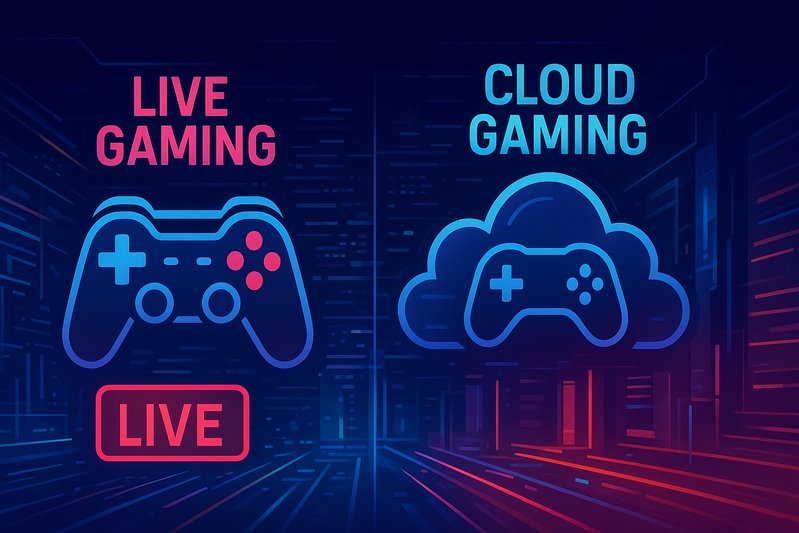
Game streaming splits into two principal architectures: live game streaming and cloud gaming. Live streaming involves a broadcaster sharing gameplay with audiences through complex infrastructures like cloud encoding and CDNs, whereas cloud gaming streams interactive game scenes directly from GPU servers to players, requiring low-latency feedback for player inputs. This dual architecture caters to the distinct needs of different gaming experiences – one focused on broad audience reach through platforms like Twitch, and the other aiming at providing the most responsive gameplay experience in cloud gaming environments.
Recent advancements have focused on optimizing both architectures for latency and scale. Low-latency ABR protocols such as LL-HLS and LL-DASH, when paired with CMAF, can achieve 1–3 seconds end-to-end latency, which is crucial for seamless live broadcast experiences across millions of devices [12][13]. On the other hand, protocols like WebRTC deliver sub-200 ms latency, essential for interactive features in gaming and co-streaming, albeit at a higher infrastructure cost [14][16].
Innovations in Codec Technology
Codec technology continues to be a focal point for reducing latency and improving streaming efficiency. AVC/H.264 remains the most universally supported codec; however, newer codecs like HEVC and AV1 are gaining traction due to their improved compression efficiency. AV1, in particular, has seen accelerated adoption thanks to its capability to save 20–30% bitrate compared to similar quality levels offered by older codecs [4][6][8]. This efficiency is increasingly relevant for real-time interactive applications, especially as more hardware devices support AV1 decoding.
Cutting-edge technologies such as WebCodecs and WebGPU present exciting opportunities for low-level, hardware-accelerated video decoding and encoding, promising reduced latency and enhanced video quality for in-browser gaming experiences [40][41].
Transport, Ingest, and Real-Time Protocols
The transport and protocol layers underpinning game streaming have evolved to meet the needs of both live and interactive streaming. RTMP remains prevalent, especially within creator ecosystems, due to its compatibility and robust support across a wide range of devices [11]. However, newer protocols like SRT and RIST are gaining popularity for secure, low-latency content contribution over unmanaged networks, offering resilient, encrypted streaming paths even across the public internet [9][10].
For real-time interactive experiences, WebRTC stands as the dominant technology owing to its ultra-low latency capabilities. The introduction of standards such as WHIP and WHEP simplifies WebRTC session management by leveraging HTTP for ingress and egress, thus enhancing interoperability among diverse media servers and client applications [14][15].
Harnessing the Power of AI and Cloud Infrastructure
Artificial intelligence and cloud advancements are crucial in shaping future gaming experiences. Platforms are starting to leverage AI for super-resolution, real-time denoising, and other enhancements, allowing for better visual quality at reduced bitrates [78][79]. Cloud infrastructures are optimizing deployment by enabling regional GPU acceleration, thus reducing the round-trip time and jitter extensively, pivotal in cloud gaming and AI-driven media processing [28][31].
Conclusion: A Collaborative Future
Game streaming technology continues its rapid evolution, offering enhanced interactivity, reduced latency, and improved user experiences. As we move towards 2026, the key trends — accelerating codec adoption like AV1, the maturation of WebRTC for interactive applications, and the integration of AI — will steer the gaming ecosystem towards unprecedented heights. The successful implementation of these innovations requires a collaborative effort among platform providers, hardware manufacturers, and developers to balance latency, scalability, and user engagement.
These technological breakthroughs are not just reshaping gamer experiences but also providing developers with powerful tools to create more immersive and responsive platforms. The future of game streaming lies in leveraging these advanced technologies to craft richer, more dynamic, and universally accessible player experiences.
Sources & References
