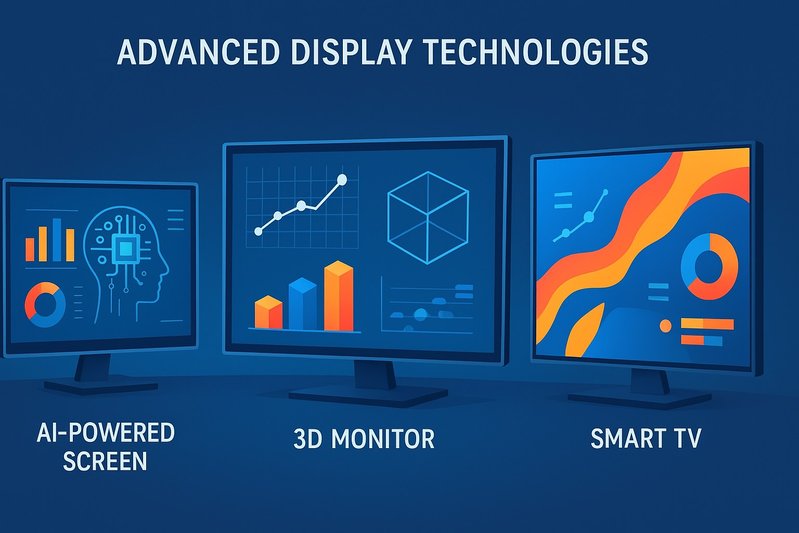
The Future of Displays: AI and Premium Screens Drive Innovation
Explore the Cutting-Edge Advancements in Display Technology Unveiled at This Year’s CES 2026
Consumer Electronics Show (CES) 2026 was a testament to the rapid advancements in AI and display technologies. From Samsung’s world-first 130-inch Micro RGB TV to glasses-free 6K 3D monitors, the event unveiled an array of innovative products that promise to redefine user experiences across various sectors. Let’s explore the forefront of display technology and how AI is catalyzing the evolution of these premium screens.
AI-Powered Displays: A New Paradigm
At CES 2026, a key theme was the seamless embedding of AI across numerous devices. Samsung led the charge with its Vision AI Companion, now a staple across its 2026 TV range, designed for conversational guidance, live translation, and generative capabilities. This AI integration transforms TVs into smart companions that predict and respond to user needs through a hybrid of on-device and cloud AI, all securely managed through Samsung’s Knox platform.
The driving force behind this shift is Samsung’s investment in long-term support with promises of seven years of Tizen OS updates, ensuring sustainability and continuous improvement of features [17][18]. These innovations emphasize a future where displays are not just passive screens but active participants in the user experience, capable of enhancing entertainment through smart interaction and dynamic content delivery.
The Pinnacle of Display Technology
Samsung’s 130-Inch Micro RGB TV
Topping the display category was Samsung’s show-stopping 130-inch Micro RGB TV, offering vibrant imagery perfect for premium living spaces. Highlighted by its stunning 100% BT.2020 color range and VDE certification, this TV provides a cinematic viewing experience tailored to art-centric homes. It’s a part of Samsung’s broader push into premium living room solutions, offering sizes ranging from 55 to 115 inches [17][18].
Glass-Free 6K 3D Displays
Samsung’s innovation didn’t stop there. It showcased a glasses-free 3D 32-inch Odyssey monitor, enabling an immersive 3D effect without the need for additional eyewear. This advancement, alongside a 1,040 Hz mode introduced on a 27-inch G6 monitor, presents new frontiers for gaming and entertainment, promising eSports-class responsiveness unprecedented in consumer-grade displays [17][18].
Integration Beyond Displays: The Ecosystem Approach
CES 2026 was not only about closed-loop automation in displays but also about building comprehensive ecosystems. Samsung’s ecosystem pitch extended beyond TVs and monitors to encompass smart home and lifestyle applications. This included AI-driven portable projectors like the Freestyle+, which boasts AI calibration capabilities, and greater integration with gaming and streaming services [17][18].
By syncing home devices through a unified AI platform, such innovations aim to enhance overall user convenience and interconnectivity between different facets of digital life. With AI chaperoning the orchestration of content and home device interaction, Samsung is setting the stage for a smarter, more cohesive home environment.
Broader Trends and Implications
The innovations at CES 2026 signal a shift toward smart living powered by cutting-edge displays and AI. With AI becoming the backbone of user interaction, privacy, latency, and cost are prioritized through on-device solutions, ensuring users receive immediate and secure experiences.
Further, Samsung’s commitment to AI extends to industry partnerships and the broader adoption of connectivity standards like HDR10+ Advanced, Wi-Fi 7, and HDMI 2.1. These standards ensure that displays can handle complex visual data efficiently, keeping pace with rapidly evolving entertainment and productivity needs [17][18].
Conclusion: The Promising Horizon
CES 2026 exemplifies the marriage of AI and premium display technology, positioning them at the heart of modern digital lifestyles. As AI capabilities burgeon, we anticipate smarter interactions, more vibrant visuals, integrated ecosystems, and supportive structures like seven-year software updates transforming the everyday screens into game-changing tools of innovation.
The pivotal advancements showcased at CES demonstrate that the future of displays is not just about brighter and larger screens but involves creating intelligent, interactive visual companions that adapt to our lifestyles. This marks a transformative era where technology truly becomes a seamless companion, enriching both our leisure and work avenues.
In embracing this future, businesses and consumers alike must focus not only on hardware capabilities but also on the integrated AI systems that will drive the next generation of visual technology forward.