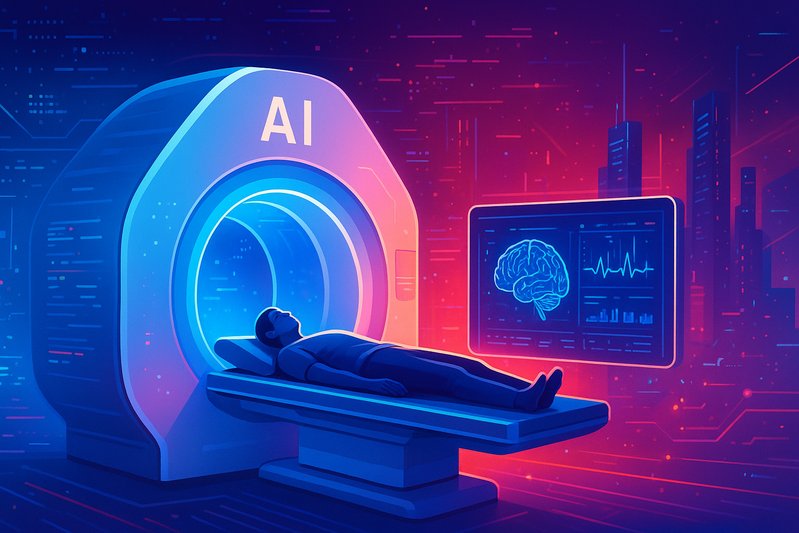
The Healthcare Revolution: How AI is Transforming Triage and Diagnosis
Introduction
The healthcare sector is undergoing a seismic shift, driven by the rapid adoption of artificial intelligence (AI) technologies that are reshaping traditional paradigms of patient diagnostics and treatment. Nowhere is this more evident than in the fields of AI-enabled imaging and digital pathology, where innovative applications are enhancing the speed and accuracy of triage and diagnosis. This article delves into the transformative impact of these technologies, exploring how AI is solving critical challenges in healthcare while paving the way for a future where enhanced diagnostic capabilities will be the norm.
The Role of AI in Imaging and Pathology
In the modern healthcare ecosystem, radiologists and pathologists often face overwhelming workloads, with increasing pressures to deliver timely and accurate diagnoses. AI-enabled imaging solutions address these challenges by augmenting human expertise to prioritize high-risk cases and provide decision support. For instance, AI technologies now assist in the rapid triage of life-threatening conditions such as stroke and pulmonary embolism, utilizing advanced algorithms to analyze images and identify critical findings more swiftly than traditional methods.
AI’s role extends beyond triage to primary diagnostics in digital pathology. Recent advances have seen AI systems receive regulatory approval to serve as primary diagnostic tools for specific conditions. The FDA’s approval of the Paige Prostate Detect for use in prostate cancer diagnosis based on whole-slide imagery is a landmark event in this area, setting a precedent for future AI applications in pathology (Paige FDA Approval).
Integrating AI with Existing Healthcare Systems
The success of AI in healthcare hinges on seamless integration with established systems. AI-driven imaging tools and digital pathology solutions are designed to work with Picture Archiving and Communication Systems (PACS) and Laboratory Information Systems (LIS), supporting formats like DICOM and whole-slide imaging (WSI) while ensuring interoperability through standards such as HL7 FHIR.
In critical, latency-sensitive scenarios, AI tools often incorporate edge computing solutions housed within hospital data centers. This setup ensures that AI applications can function efficiently, even in environments with strict privacy and regulatory requirements, including compliance with frameworks like HIPAA and ISO/IEC 62304 (ISO/IEC 62304).
Regulatory Approvals and Evidence-Based Adoption
AI technology’s integration into healthcare practices is marked by rigorous validation and regulatory scrutiny. In the United States, hundreds of AI-enabled devices are approved for clinical use by the FDA, spanning diverse applications from triage and detection to quantification and decision support in imaging and pathology (FDA AI/ML Devices).
Evidence of AI’s efficacy in healthcare is robust. For instance, the first autonomous diagnostic AI device, IDx-DR, demonstrated impressive sensitivity and specificity for diabetic retinopathy, setting a high benchmark for future AI applications (IDx-DR).
Market Dynamics and Return on Investment
The market dynamics for AI in healthcare are significantly influenced by the global shortage of clinicians and increasing diagnostic workloads. AI solutions offer substantial return on investment by enhancing throughput and report accuracy, thus reducing the burden on healthcare professionals, minimizing diagnostic delays, and improving patient outcomes. Moreover, AI-driven solutions align perfectly with the push towards value-based care, where payments are linked to patient outcomes rather than service volumes.
Challenges and Future Prospects
Despite the clear benefits, the implementation of AI in healthcare is accompanied by challenges such as dataset shift, model bias, and potential cybersecurity vulnerabilities. Addressing these challenges requires comprehensive validation, continuous post-market surveillance, and multi-site operating point calibration. Industry standards and regulatory frameworks will play a crucial role in ensuring that AI implementations maintain security and efficacy across diverse healthcare settings.
Looking forward, the landscape of healthcare will likely see even deeper integration of AI technologies. By 2026, expectations are that AI solutions will not only enhance capabilities in imaging and pathology but also expand into autonomous care delivery settings through innovative applications such as remote monitoring and telehealth services.
Conclusion
AI is revolutionizing healthcare by transforming how diagnostic and therapeutic processes are performed, particularly in fields like imaging and digital pathology. By leveraging powerful algorithms and enhanced computing capabilities, AI enhances healthcare professionals’ capacity to deliver precise, timely diagnoses and improve patient care outcomes. As AI technologies continue to evolve, they promise not only to alleviate current bottlenecks but also to spearhead new innovations in healthcare delivery.
Key Takeaways
- AI is significantly revolutionizing healthcare, particularly in imaging and digital pathology, by enhancing the accuracy and speed of diagnosis.
- Regulatory approvals and growing evidence of AI efficacy underline its potential as a primary diagnostic tool in various medical fields.
- Challenges remain, including system integration, data security, and model bias, yet the potential benefits of AI in healthcare far outweigh these hurdles.
- The future of healthcare looks to be heavily AI-influenced, with broader applications and more autonomous diagnostic capabilities expected by 2026.