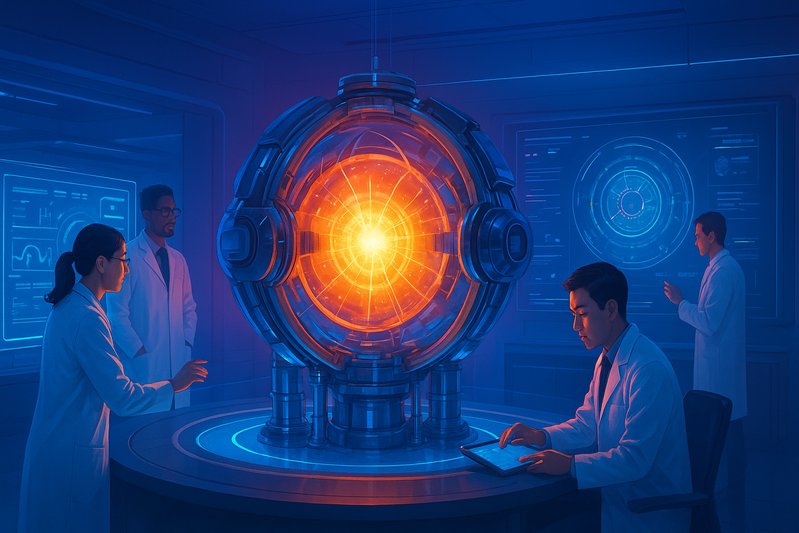
The New Age of Energy: Advances in Nuclear Fusion Research
Unveiling the Promise of Sustainable Energy Through Breakthroughs in Fusion Technology
In the quest for sustainable and clean energy solutions, nuclear fusion has long held the promise of virtually limitless power. Unlike nuclear fission, which powers today’s nuclear reactors by splitting atoms, fusion seeks to merge hydrogen atoms to form helium, releasing substantial energy in the process. Recent technological advances and strategic international collaborations have heralded a new era in fusion research, significantly accelerating progress towards its practical realization.
Transformative Contributions and Global Collaborations
The journey towards viable fusion energy has been marked by international cooperation and collaborative science. At the forefront is the International Thermonuclear Experimental Reactor (ITER), the largest scientific collaboration ever undertaken in the realm of energy research. ITER brings together the European Union, the United States, Russia, China, Japan, South Korea, and India. Housed in France, ITER functions through a council-driven governance structure and relies on sophisticated in-kind procurements through its Domestic Agencies. This setup centralizes the global integration of physics and engineering, affirming its pivotal role in driving nuclear fusion innovation [1][2][3].
Notably, ITER’s control system, built on the Experimental Physics and Industrial Control System (EPICS), has established a de facto standard for plant-wide integration, influencing control and data practices globally. As a result, it not only consolidates efforts in fusion research but also paves the way for future facilities to follow a unified technological path [4].
The International Atomic Energy Agency (IAEA) further anchors these scientific endeavors with its biennial Fusion Energy Conference, fostering a platform for the exchange of ideas and advancements. It also contributes vitally by publishing safety standards that serve as benchmarks for national authorities, thus promoting a harmonized approach to safety and regulation [25].
Public and Private Partnerships Driving Innovation
Public research consortia such as EUROfusion have been instrumental in aligning various European laboratories and universities to a common objective. EUROfusion orchestrates efforts from the Joint European Torus (JET) to groundbreaking scientific advancements like the recent deuterium-tritium campaigns [5][6]. The UK Atomic Energy Authority’s recent successes with the Spherical Tokamak for Energy Production (STEP) program highlight national efforts channeling industry and research collaboration towards commercialization readiness [10].
In parallel, the private sector has seen tremendous leaps, spearheaded by companies like Commonwealth Fusion Systems, which focuses on high-temperature superconducting (HTS) tokamaks, and Helion Energy, known for its magneto-inertial and pulsed concepts. Such enterprises are catalyzing the fusion industry, creating advanced HTS machines, and securing forward power purchase agreements, indicating a viable future market for fusion energy [32][39].
Regulatory Momentum and Safety Protocols
The evolution of regulatory frameworks is critical to the readiness of fusion energy. The United States Nuclear Regulatory Commission (NRC) has established a pathway for regulating fusion under byproduct material rules, distinctly different from traditional nuclear reactor regulations. This model prioritizes safety elements pertinent to fusion, such as radiological protection of tritium and activated materials, while sidelining concerns typical of fission reactors [61].
The European response mirrors this streamlined approach, with the UK adopting a bespoke framework that routes fusion through the Health and Safety Executive and environmental regulators. These strides toward proportionate regulation reduce ambiguity and foster earlier engagement on safety cases and facility siting, setting a promising trajectory for fusion power plant licensing [9].
Ecosystem Health and Prospect for the Future
The global fusion ecosystem is vibrant, marked by high activity levels and significant scientific milestones. Facilities like the Wendelstein 7-X (W7-X) in Germany and the EAST in China have achieved long-pulse operations and steady-state plasmas, underscoring their engineering prowess and potential to sustainable energy solutions [17][22]. In the United States, the National Ignition Facility has made headlines by achieving, and subsequently repeating, ‘scientific ignition,’ a critical breakthrough reaffirming the feasibility of fusion energy [24].
In conclusion, the nuclear fusion research landscape today reflects a blend of scientific brilliance, regulatory ingenuity, and collaborative spirit. While challenges remain, particularly in scaling supply chains and achieving first-of-a-kind plants, the momentum is undeniably forward. With informed regulatory paths, sustained investment, and deepening international cooperation, fusion energy remains a formidable contender in the race toward sustainable and secure global energy futures.