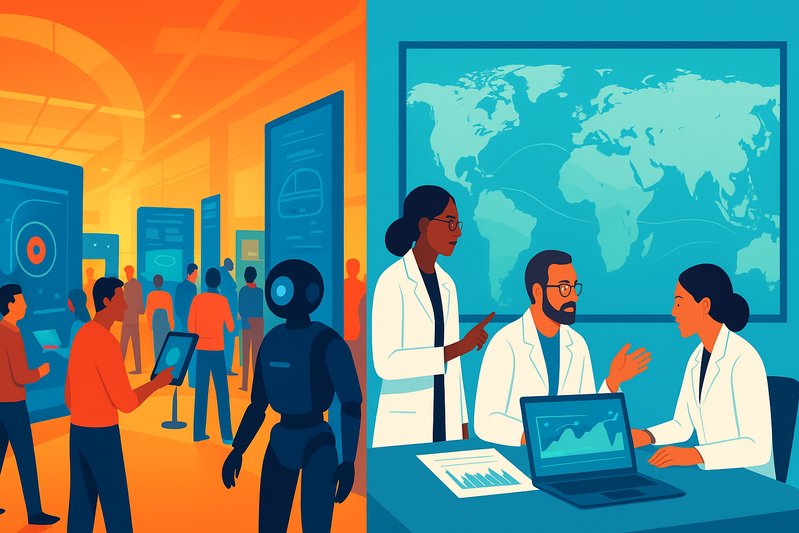
Two Paths, One Goal: Comparing CES and CESM’s Community Landscapes
Introduction
In the vast world of global communities, “CES” refers to two vastly different entities: the Consumer Electronics Show organized by the Consumer Technology Association (CTA) and the Community Earth System Model (CESM), an open-source scientific initiative by NCAR/UCAR. Each holds its own unique governance structure, participation pathways, and ecosystem health, making them intriguing subjects for comparison.
Defining the Communities
First, let’s distinguish these entities. The Consumer Electronics Show (CES) is known globally for showcasing cutting-edge consumer technology innovations. Managed by the CTA, it is a premier event that draws industry leaders, innovators, and government influencers [1][2]. On the other hand, CESM represents a collaborative scientific effort aimed at climate modeling. It is an open-source project where scientists from around the world gather to advance our understanding of Earth’s climate system [4][6].
Governance: Top-Down vs. Collaborative
CES: An Association-Led Structure At the CES, governance is centralized through the CTA. Key decisions are made by the association’s board and committees, which shape the event’s themes and participation rules. This top-down approach is designed to efficiently marshal resources and ensure high standards of exhibition and conduct [1][2].
CESM: A Collaborative Scientific Community In contrast, CESM operates under a collaborative governance model. A Scientific Steering Committee (SSC) works alongside domain-specific working groups to set priorities and advance scientific objectives. This bottom-up approach ensures that decisions incorporate broad scientific input and consensus [4].
Participation Pathways: Organized vs. Open
Participation at CES Participation in CES is both structured and transactional. Industry players participate by purchasing exhibitor space or sponsorships, while experts and industry insiders can contribute via speaking engagements or membership in CTA committees. The focus here is on showcasing new products and technologies within a highly regulated framework [1][3].
Participation at CESM CESM encourages open collaboration. Researchers, universities, and organizations contribute to the CESM through code contributions and scientific collaborations managed through open platforms like GitHub. Engaging in CESM is inherently participative, designed to enhance transparency and encourage constructive dialogue within the scientific community [6][8].
Measuring Community Health
CES: Using Industry Metrics Health metrics for the Consumer Electronics Show focus on scale and diversity. Indicators such as attendance figures, sponsorship diversity, and media reach are critical. These metrics underscore the event’s relevance and impact in the tech industry [1][3].
CESM: Open Source Health Indicators Conversely, CESM’s ecosystem health is seen through open-source community metrics like contributor activity, issue resolution rates, and release frequencies. The community’s vitality is reflected in its ability to attract and retain contributors and maintain a steady cadence of scientific inquiries and updates, aligning with CHAOSS project health metrics [6][9].
Intellectual Property and Licensing
CES is guarded by trademark regulations, ensuring that the CTA maintains strict control over its branding and the content presented at its events. Exhibitors, while owning their intellectual property, must comply with event policies [1][2].
In the open scientific realm of CESM, code and models are shared under permissive licensing agreements. This approach facilitates broad collaboration and innovation, encouraging widespread use and adaptation of the CESM systems in climate research worldwide [6][9].
Regional and Global Impact
CES has a significant global footprint, engaging participants and companies worldwide. Its influence spans across continents, showcasing technological innovations from North America, Asia, and Europe. Changing geopolitical dynamics and travel conditions can affect attendance and participation levels [1][3].
CESM, with its strong U.S. base and European leadership, is likewise engaged globally, with significant contributions and collaborations in Asia and beyond. This international cooperation is crucial for advancing its climate modeling capabilities [4][5].
Conclusion
Both CES and CESM demonstrate robust and successful models within their respective arenas. CES’s centralized, industry-focused model excels in driving market innovations and partnerships, while CESM’s open, community-driven approach supports advancing scientific inquiry. Despite different methodologies and goals, both are committed to improving their respective fields, shaped by the unique environment and operational models they adopt.
Key Takeaways
- CES is a hallmark in consumer technology exhibitions with a structured, event-driven participation model, while CESM is collaborative and open-source, advancing scientific research.
- The governance in CES is centralized under CTA, whereas CESM relies on collective scientific governance.
- Health metrics highlight the differences: CES focuses on market reach and financial sustainability, whereas CESM emphasizes contributor activity and scientific output.