Unveiling the Layers of AR Performance
Explore the Critical Layers Affecting AR Performance and the Optimizations that Can Enhance User Experiences
The rise of augmented reality (AR) has undoubtedly transformed how we interact with digital content. From mobile phones to standalone headsets, AR technology is reaching more people than ever. But what truly lies beneath the surface of these immersive experiences? Performance is key. Understanding the layers involved in AR performance and the bottlenecks at each stage are crucial for developers aiming to refine and enhance user experiences. Here, we explore the factors affecting AR performance and the optimizations needed to overcome them.
The Multi-Layered Nature of AR Performance
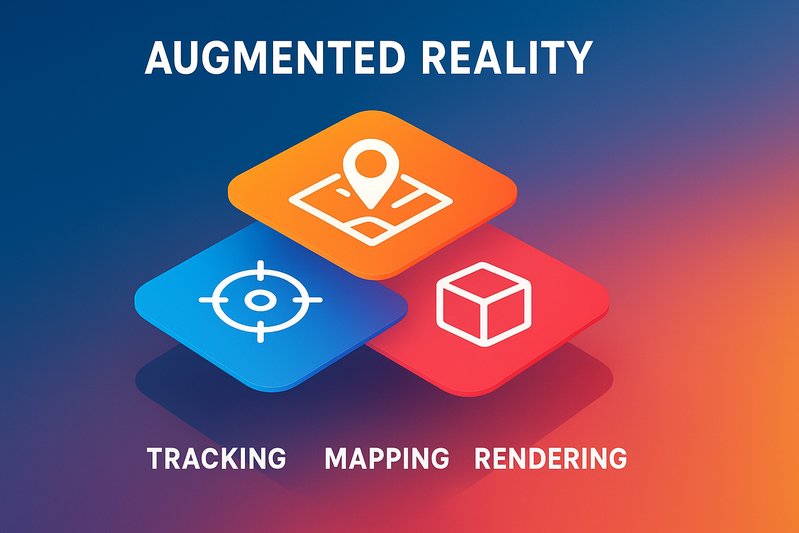
To unravel the intricacies of AR performance, it’s vital to start with the layers that comprise it. Each component, including tracking and mapping, rendering pipelines, scene understanding, and neural scene methods, intersects to deliver what we perceive as a seamless experience.
Tracking and Mapping
Tracking and mapping provide the foundation for any AR system. For mobile devices like iOS and Android, leveraging ARKit and ARCore respectively, the focus is on world tracking and motion tracking, which calculate position and orientation in real-time. These systems are stress-tested using datasets like EuRoC and TUM-VI to measure absolute trajectory error (ATE) and relative pose error (RPE). But bottlenecks often occur due to elements like IMU jitter or feature scarcity. Optimizations like adaptive feature thresholds and keyframe pruning are essential to maintaining tracking stability.
Rendering Pipelines
Rendering is another critical layer, requiring synchronization across multiple components. Whether running on-device or leveraging the cloud, rendering must balance between latency, quality, and thermal efficiency. By assessing forward versus deferred shading and multithreaded rendering, developers can tackle common issues like GPU overdraw and shader pressure. Techniques like Dynamic Resolution Scaling (DRS) significantly help mitigate these challenges by adapting the rendering load dynamically based on device performance metrics.
Scene Understanding
Scene understanding allows AR systems to interpret and adapt to their surrounding environments. ARKit’s Scene Geometry and ARCore’s Depth API are pivotal in achieving high-quality occlusion effects. By calculating metrics such as depth Mean Absolute Error (MAE) and root mean square error (RMSE), developers can refine occlusion and meshing fidelity using real-world datasets like Replica and ScanNet.
Neural Scene Methods
The advent of neural scene rendering methods, such as Neural Radiance Fields (NeRFs) and 3D Gaussian Splatting, challenges conventional approaches to rendering. While NeRFs enhance visual fidelity, they require significant processing power. Techniques like quantization and level-of-detail controls help balance the trade-off between rendering quality and computational load.
Optimizations are Crucial
Optimizations across AR systems aren’t just beneficial—they’re necessary. They contribute to minimizing motion-to-photon (MTP) latency, improving track accuracy, and enhancing thermal efficiency. For example, zero-copy techniques in camera/ISP allows for reduced latency by eliminating unnecessary data conversions. Effective power management becomes crucial in maintaining frame stability in thermal-constrained environments, often requiring innovative solutions such as adaptive bitrate streaming or foveated rendering.
Conclusion: Paving the Path Forward
The landscape of AR technology is continually developing as new optimizations and innovations emerge. Performance layers, with properly identified bottlenecks and tailored optimizations, promise more realistic and stable augmented reality experiences. As developers push the envelope, the collaboration between software intricacies and hardware capabilities will dictate the pace and success of AR advancements in the years to come.
By focusing on enhancements across AR’s critical layers—tracking/mapping, rendering, scene understanding, and neural scene methods—developers can ensure that future AR experiences are both deeply engaging and seamlessly efficient.